

Dust builds up fast on a construction site because cutting, grinding, and vehicle movement never really stop. One day, it’s a light layer on the floors, and the next, it’s a visibility issue, a slip hazard, and a compliance headache all at once. That’s where dust control sweeping plays its part in keeping things under control.
Professionals like Bites Off Broadway know this better than anyone. Here’s everything you need to know about why dust builds up, what risks it creates, and how regular sweeping keeps your site running without a hitch.
What Dust Control Sweeping Actually Does on a Construction Site
Dust control sweeping removes loose particles from worksites before they become airborne, spread across surfaces, or create safety and compliance problems. It’s something you do consistently, not just once, to keep floors clear and air quality at a safe level.
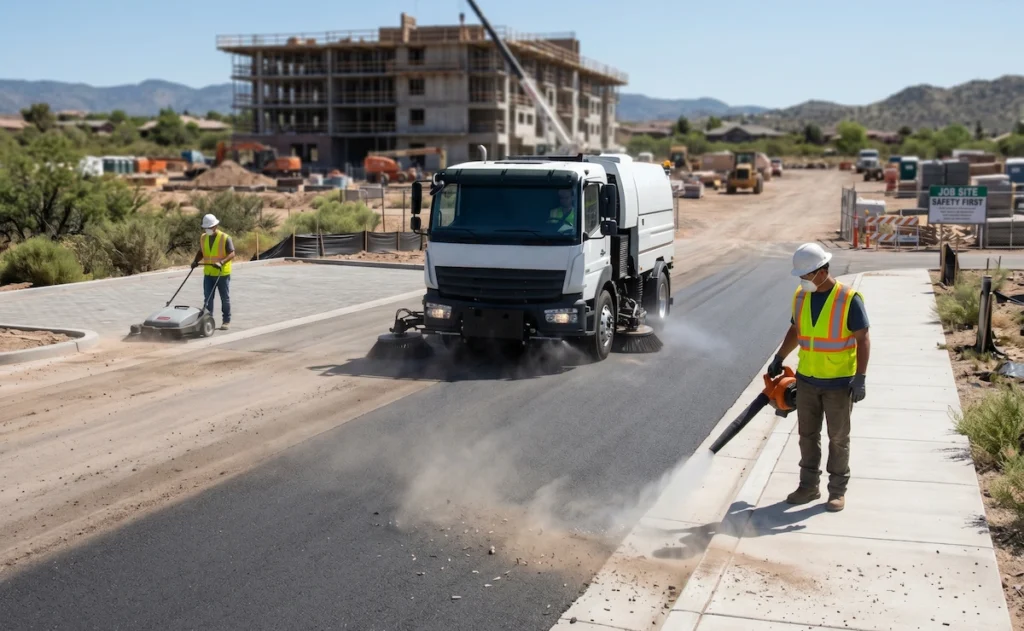
Let’s break down exactly what’s happening beneath the surface.
How Dust Builds Up Faster Than You’d Expect
Construction activity constantly generates new dust from cutting, grinding, and vehicle movement. And honestly, concrete grinding alone can release fine particles across a surprisingly wide area within minutes.
That dust doesn’t just disappear after the work stops. It settles on floors, equipment, and access paths, which means a single clean rarely holds without a regular schedule behind it.
Why Air Quality Takes the Hit First
Fine silica and concrete dust become airborne quickly, and the particles are small enough to travel deep into a worker’s lungs. You can’t always see them, and that’s exactly what makes them worth taking seriously.
If poor air quality goes unaddressed, you could find yourself offside with WorkSafe Queensland guidelines before long. And on that note, silica dust carries serious long-term health risks, including silicosis, an irreversible lung condition with no cure.
The Surfaces That Collect the Most Debris
Hardstands, access roads, and car parks collect the heaviest build-up of loose debris on any active site. In these high-traffic areas, dust and grit get pressed in and spread further with every pass of a vehicle or boot.
Unsealed flat surfaces make the problem even worse. Dust lingers longer on them, and a few days without a sweep can undo a week’s worth of site tidiness pretty quickly.
What Happens When You Leave It Too Long
Debris builds into compacted layers over time, and those layers need far more intensive cleaning methods to shift. What a regular sweep would have handled in 20 minutes can turn into a half-day pressure cleaning job.
Stormwater runoff adds another layer of trouble. Rain carries accumulated debris offsite, and local authorities treat stormwater contamination as a compliance issue worth acting on.
The Real Risks of Skipping Regular Debris Removal
Most site managers don’t think about debris until someone slips, a drain blocks, or a compliance officer shows up. By that point, the problem has already grown legs. Regular debris removal isn’t just about keeping things tidy. It’s a direct line to site safety, equipment longevity, and staying on the right side of the law.
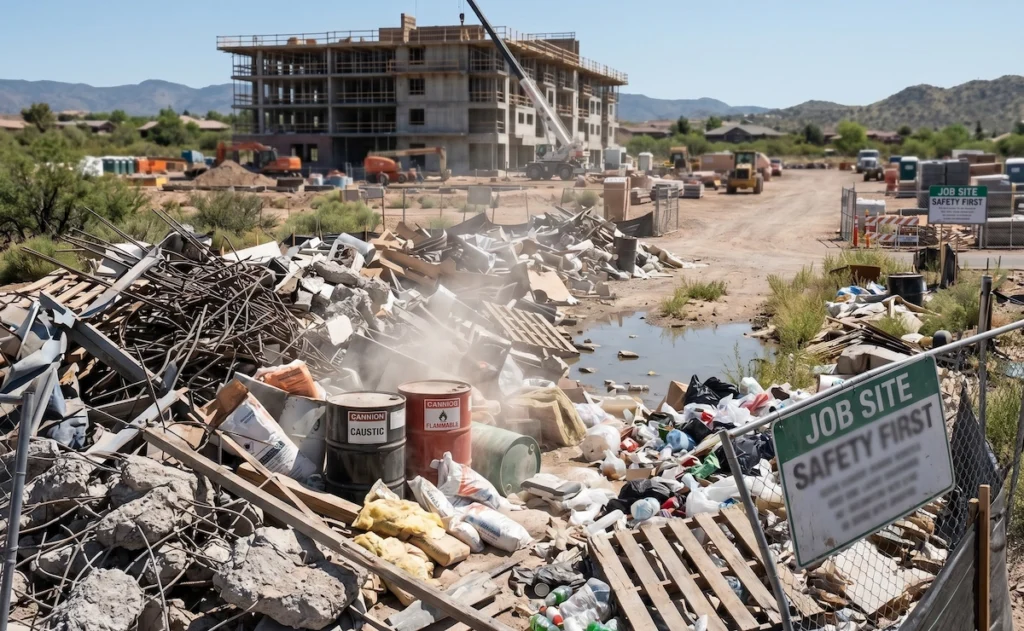
Here’s what builds up when removal gets pushed to the back burner.
- Slip and Fall Hazards: Loose debris on floors and access paths increases the risk of slip, trip, and fall incidents for workers and visitors alike. These aren’t minor concerns either. A single incident can halt a project, trigger a WorkCover claim, and put your whole operation under scrutiny.
- Respiratory Damage: Dust exposure without proper controls can lead to serious conditions down the track, and Safe Work Australia outlines clear duties for every business running a construction site. That means ignoring waste and airborne dust can lead to legal consequences just as much as health ones.
- Drainage Blocks: Unmanaged debris finds its way into drains faster than most people expect, especially after rain. Blocked drainage leads to water damage, environmental risks, and the kind of compliance penalties that put a serious dent in any project budget.
As a result, staying on top of removal from the start costs far less than dealing with the fallout later.
How Industrial Sweeping Services Keep the Site Running Smoothly
Professional sweeping crews work around your schedule, so the site keeps moving without shutdowns or wasted hours. That’s the real value of bringing in an experienced team. They know the right process, bring the right equipment, and get it done without getting in the way of everything else happening on site.
What’s more, road sweepers and compact machines cover large floor areas efficiently, from warehouses to open hardstands, without halting operations.
Scheduled maintenance is what separates a clean site from a consistently clean one. A one-off sweep tidies things up for a day. Meanwhile, a regular programme keeps floors clear, reduces equipment wear from grit and debris, and makes safety inspections a whole lot smoother when they come around.
High Pressure Cleaning vs. Sweeping: Which One Does What?
A lot of site operators assume sweeping and pressure cleaning do the same job. Actually, they don’t, because there is a clear difference in what each one is built to handle. If you know which one fits your situation, that would save you time, money, and a fair bit of back-and-forth on-site.
See the table below to understand how they stack up.
|
Sweeping |
High Pressure Cleaning | |
|
Best for |
Dry loose debris, dust, dirt |
Surface staining, residue, grime |
|
Equipment |
Road sweepers, compact machines |
Commercial-grade equipment, pressure units |
|
When to use |
Regular scheduled maintenance |
After sweeping, or for deep cleans |
|
Surfaces |
Floors, hardstands, car parks |
Walls, floors, and scrubbing applications |
In practice, the two work best as a pair. Sweeping handles the bulk of loose material first, clearing the surface so pressure cleaning can do its job properly. Skipping the sweep and going straight to pressure means you’re just pushing dirt and debris around rather than removing it.
Keep in Mind: Controlling dust and waste on site is a legal duty for every business running active operations, as outlined by Safe Work Australia. Using the right tools for each task is a straightforward way to stay on the right side of that requirement.
Car Parks, Hardstands, and Other Areas Professional Cleaners Cover
Ever driven past a commercial site with gravel and grit spread across the car park? That’s what happens when these surfaces don’t get regular attention. Professional cleaners cover a wider range of areas than most people realise, and each one comes with its own cleaning demands.
For starters, car parks collect tyre rubber, dirt, and loose debris from daily vehicle movement. Without regular cleaning, that build-up migrates onto public roads and into stormwater drains. Property owners and builders then bear the environmental consequences of that.
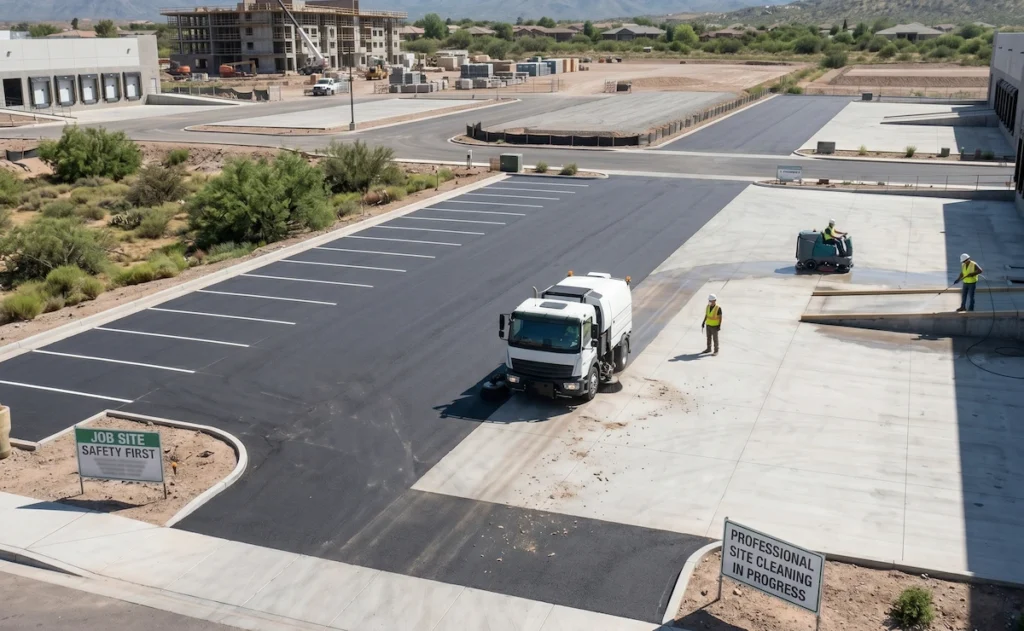
Hardstands and external warehouse floors face a similar issue. Heavy machinery, foot traffic, and open exposure to the elements mean waste and grit accumulate fast. Manufacturing plants and logistics hubs feel this most, given the constant movement of vehicles and materials through those floors every single day.
Scheduled cleaning across all these areas keeps the whole property looking sharp, protects the surrounding environment, and makes compliance inspections far less stressful. Our professional teams work across South East Queensland, covering everything from body corporate car parks to large commercial and industrial sites.
Dry Hire or Full Service: What’s the Right Call for Your Site?
If your site already has trained operators on staff, dry hire is the more cost-effective option. You get fully equipped road sweepers delivered to your location, and your team handles the rest. Full service, on the other hand, covers everything from the equipment to the operators, so there’s nothing to organise on your end.
Here’s a quick way to think about it:
- Dry hire: your operators, our equipment, lower cost
- Full service: our experienced team handles the whole job
- Not sure: talk to us about your specific needs
Both options deliver the same quality outcome. The difference comes down to what your site already has in place. All our operators are trained and fully equipped, and we’ve built our service around making the whole process as straightforward as possible for clients across South East Queensland.
Ready to Clear the Air on Your Site?
Now that you’ve got a clear picture of what regular sweeping does, the next step is putting it into action. A clean site isn’t just about appearances. It protects your team, keeps your business compliant, and makes every stage of a project run more smoothly.
Get in touch with a reliable sweeping option today to talk through your specific needs and lock in a cleaning schedule that works for your site.