
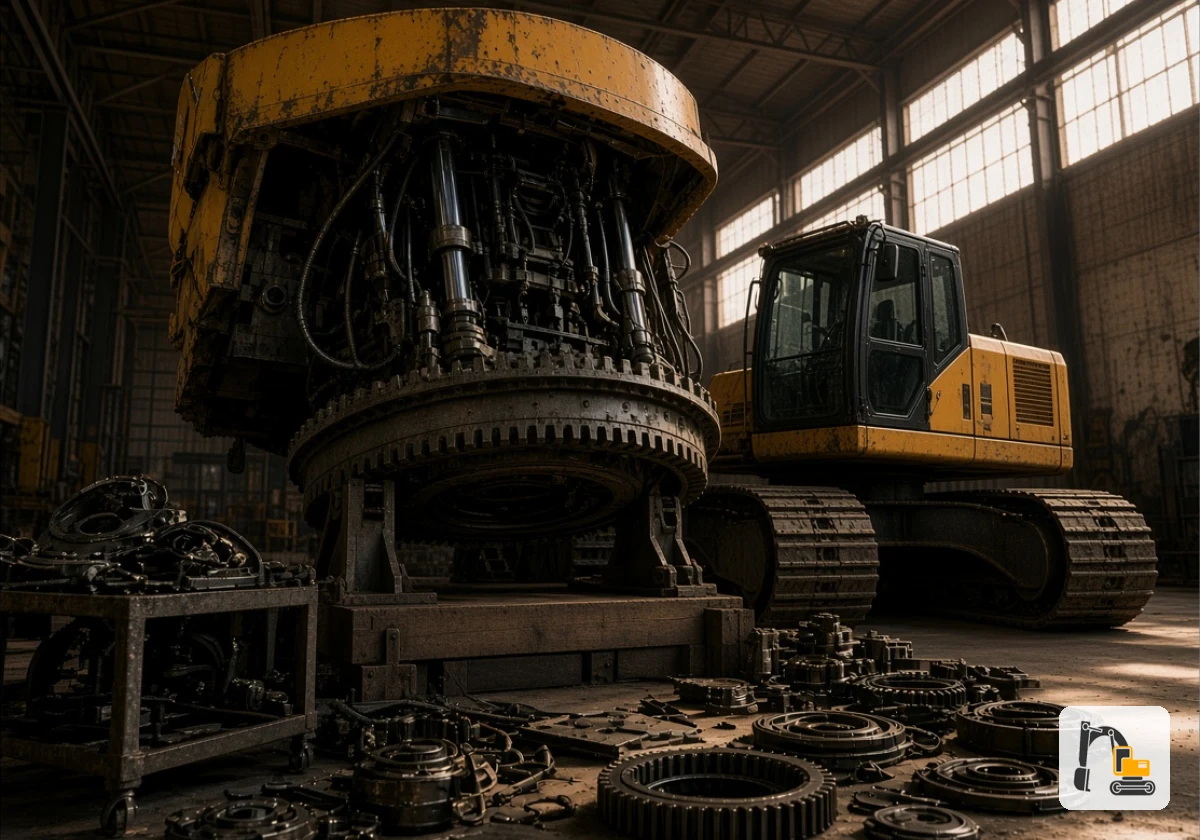
The first sign of a worn excavator swing bearing might be a noise you barely notice. Perhaps the cab makes a faint knocking sound as you turn, or the upper structure rocks slightly when you lift a loaded bucket. The machine still works, so it’s tempting to carry on and deal with it later.
That’s when a small problem can become an expensive one. The swing bearing supports the entire upper structure, including the cab, boom, and bucket. As internal parts wear, the movement damages mounting bolts, gear teeth, and other swing parts.
So, what should you look for before that happens? Let’s start with five excavator swing bearing symptoms that deserve your attention.
1. Grinding, Knocking or Clicking During Rotation

When you swing your excavator, you shouldn’t hear much noise coming from a healthy swing bearing. Grinding, knocking, or clicking sounds can mean something is wearing down or isn’t moving as it should.
Dirt and old grease can sometimes cause these noises. To check, look for contamination, hardened grease, or visible damage around the bearing. If you find dirt or old grease, clean the area and regrease the bearing according to the manufacturer’s instructions.
But what if the noise continues after cleaning and lubrication? The bearing could have internal wear or damage that regular maintenance won’t fix.
Similar sounds can also come from the swing gearbox or loose mounting bolts. So ask a mechanic to inspect those components before you assume the bearing needs replacement.
2. Excessive Movement Between the Upper Structure and Undercarriage
The upper structure should sit firmly on the undercarriage as your excavator swings. If you notice it rocking, lifting, or shifting more than usual, the swing bearing could have excessive play. You might notice this more when lifting a heavy bucket or changing the direction of the swing.
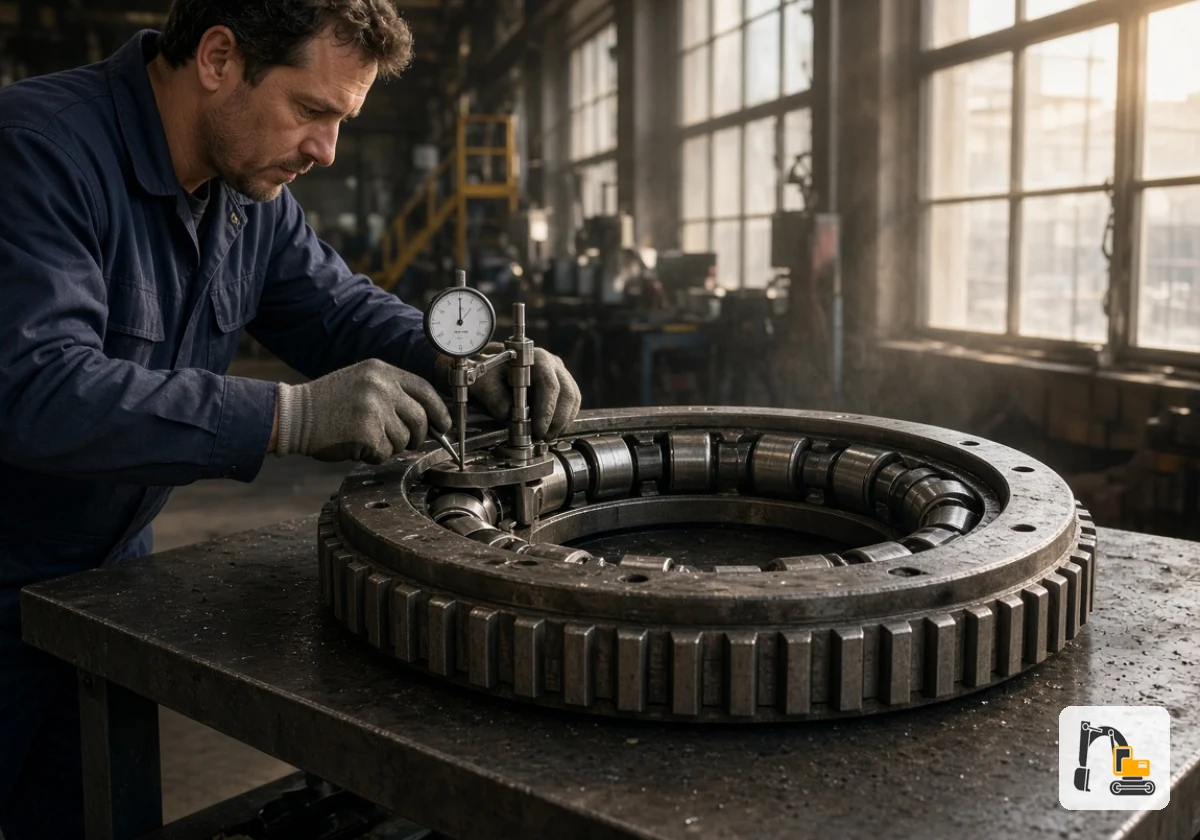
This movement can develop as the bearing wears down. Loose or damaged mounting bolts can cause similar problems, so have them checked along with the bearing. A mechanic can measure the bearing’s clearance during a swing bearing inspection and compare it with the manufacturer’s limits to determine whether it needs attention.
Until you’ve identified the cause, don’t keep operating the machine as normal. Excessive movement can put additional strain on the bearing and its mounting points, potentially leading to further damage.
3. Jerky or Uneven Swinging
Does your excavator swing smoothly when the bucket is empty but start jerking or hesitating when you lift a heavy load? Don’t brush it off as a normal response to the extra weight. It could be a sign that something in the swing system isn’t working properly.
A worn or damaged swing bearing is one possible cause. Dirt, poor lubrication, or internal damage can stop smooth rotation. Problems with the swing motor, gearbox, or hydraulic system can cause similar symptoms, though.
Pay attention to whether the jerking happens at a particular point in the swing or throughout the entire rotation. For example, a repeated hesitation in the same position gives the mechanic a specific area to investigate. Jerking throughout the swing, on the other hand, could point to a problem with the motor, gearbox, or hydraulic system.
So, don’t rush to replace the swing bearing just because the machine jerks. Have the entire swing system checked first. The mechanic uses the movement pattern and an inspection of the bearing, motor, gearbox, and hydraulics to find the faulty part.
4. Grease Leaks or Metal Particles Around the Bearing
The grease around your swing bearing can reveal two potential problems: internal wear and damaged seals. Grease leaking around a seal could mean the seal is damaged or that someone has overgreased the bearing. Damaged seals can let dirt and water enter the bearing, while excessive grease pressure can push grease past the seals.
Metal particles are a more serious warning. Shiny flakes or metallic debris in the purged grease could indicate that the bearing’s rolling elements or raceways are wearing down.
To check for contamination, spread a small sample of purged grease on a clean white surface and examine it under good lighting. Look for visible metallic particles rather than assuming every dark or dirty patch is metal.
Found shiny metal particles? Don’t dismiss them as ordinary dirt or continue operating the excavator as usual. Arrange a professional inspection to determine whether the bearing has internal damage and needs repair or replacement.
5. Loose, Stretched or Broken Mounting Bolts
Heavy-duty bolts secure the bearing to the upper structure and undercarriage. These bolts need to stay tight to keep the bearing firmly in place. When they loosen or break, the bearing can shift during operation, putting extra stress on the remaining bolts and mounting surfaces.
During your routine inspections, look for rust streaks around the bolt heads, gaps under the washers, or bolts that are missing altogether. These can all indicate that something has moved around the mounting points. If you find loose or damaged bolts, ask a mechanic to check them before you use the excavator again. We recommend tightening or replacing them according to the manufacturer’s specifications.
The swing bearing and slew ring inspection guide from Heavy Vehicle Inspection (2026) backs this up. It recommends retightening mounting bolts to the manufacturer’s torque specifications in a star pattern. The guide also recommends replacing the entire bolt set when fitting a new swing bearing rather than reusing the old hardware.
Swing Bearing, Slewing Drive or Hydraulic System: Telling the Faults Apart
Not every unusual noise or movement points to a faulty swing bearing. The swing motor, gearbox, and hydraulic system can produce similar symptoms. The table below compares common warning signs and the components that may be responsible.
| What you notice | Possible source | What to investigate |
|---|---|---|
| Knocking or rocking when lifting a load | Swing bearing or mounting bolts | Bearing clearance and fastener condition |
| Slow rotation in both directions | Hydraulic system or swing motor | Hydraulic pressure, oil level and motor condition |
| Whining from the swing drive area | Swing gearbox | Gearbox oil and internal gear condition |
| Upper structure drifts after the swing control is released | Swing brake or motor | Brake operation and motor seals |
| Jerky movement at a recurring point in the swing | Swing bearing or drive components | Bearing condition and swing drive operation |
Pay attention to whether a symptom keeps appearing in the same position or affects the entire rotation. For example, recurring noise or hesitation at a particular point can give a mechanic a reason to investigate localized bearing damage. Sluggish or inconsistent rotation throughout the swing can point towards the drive system instead.
These symptoms can help narrow down the possibilities, but they don’t confirm which component has failed. Have a qualified mechanic inspect the relevant parts before deciding on a repair or bearing replacement.
When Should You Replace an Excavator Swing Bearing?
Your excavator’s swing bearing needs replacing when the damage is too severe to repair, or its wear exceeds the manufacturer’s limits. Excessive clearance, damaged raceways, and worn rolling elements are all signs that the bearing may have reached that point.
So, how do you find out whether the damage is beyond repair? A mechanic inspects the bearing for excessive play, surface damage, and wear against the manufacturer’s specifications. They may also check the seals, lubrication, and rolling elements to determine whether the underlying problem can be repaired without replacing the bearing.
If you’re noticing severe movement, persistent abnormal noises, or other signs of bearing failure, avoid operating the excavator until it has been inspected. Continuing to work with a failing bearing can cause further damage to the swing assembly.
Keep in mind that replacing the bearing isn’t a simple component swap. Technicians have to separate the upper structure from the undercarriage, so the job requires suitable lifting equipment and experienced technicians. They’ll also need to inspect the gear teeth, mounting surfaces, and fasteners, since damage to these parts can affect the repair.
Once replacement is confirmed, you’ll need the excavator’s make, model, and serial number when sourcing a new bearing. This helps the supplier match it to your machine’s specifications.
Keep Your Excavator Turning Smoothly
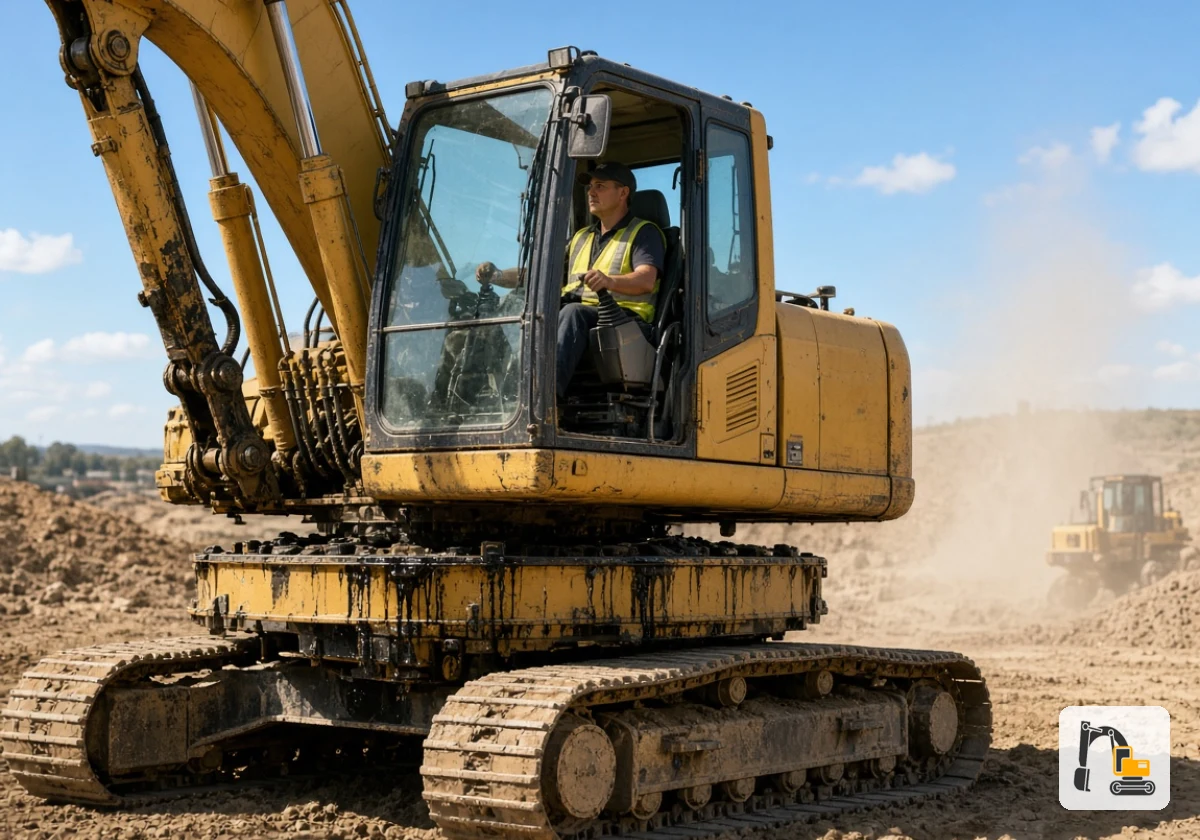
Once you’ve identified a possible swing bearing problem, the next step is getting the machine inspected and confirming whether the bearing needs replacing. Acting on the problem early can help prevent further damage to the swing assembly and avoid a more expensive repair.
If the inspection confirms that you need a replacement, Bites Off Broadway supplies OEM, aftermarket, and rebuilt excavator parts. Get in touch with us with your excavator’s make and model to discuss replacement swing bearing options for your machine.