
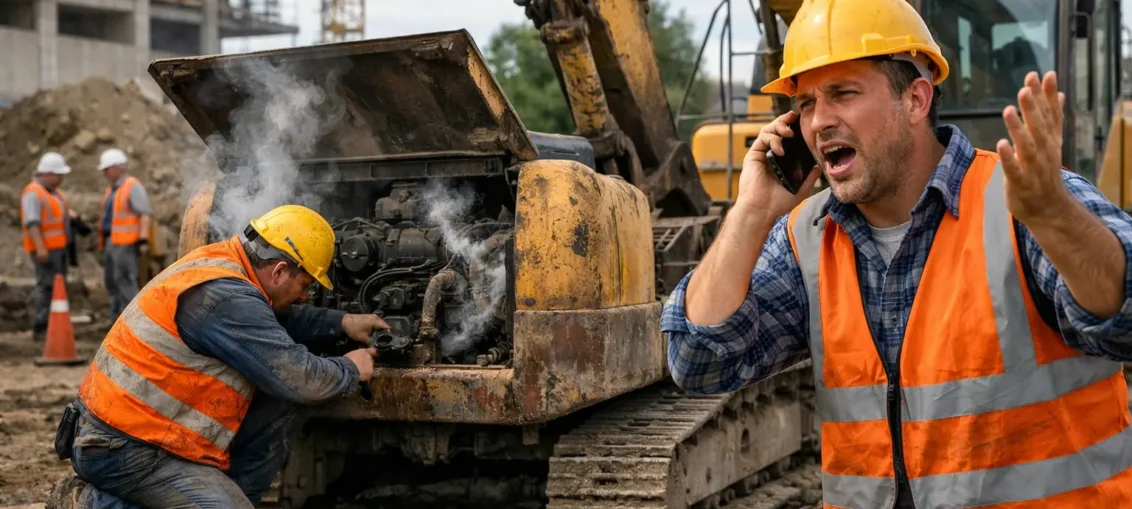
You found a great deal on excavator tracks online. The price was half what everyone else charges, so you ordered a set and installed it. But three months later, they’re already falling apart.
If that sounds familiar, you’ve run into one of the most common risks in the industry. When a budget component fails early, equipment breakdown is usually just the beginning. Unplanned downtime follows, schedules get blown, and clients start asking questions you don’t want to answer.
At Bites Off Broadway, we’ve spent over 30 years supplying undercarriage parts and machinery components to contractors across New York. We’ve seen what cheap parts do to equipment, and we’ve helped operators dig out of those holes more times than we can count.
That’s why we put this guide together. We’ll walk you through the hidden costs of going cheap, from maintenance chaos to lost income on contract work. By the end, you’ll know how to make purchasing decisions that actually save money in the long run.
What Are the Risks of Buying Cheap Parts?
Cheap parts risks include faster wear, poor fitment, and hidden damage to other components on your machine. These problems don’t always show up right away, but when they do, your budget will quickly take a hit.
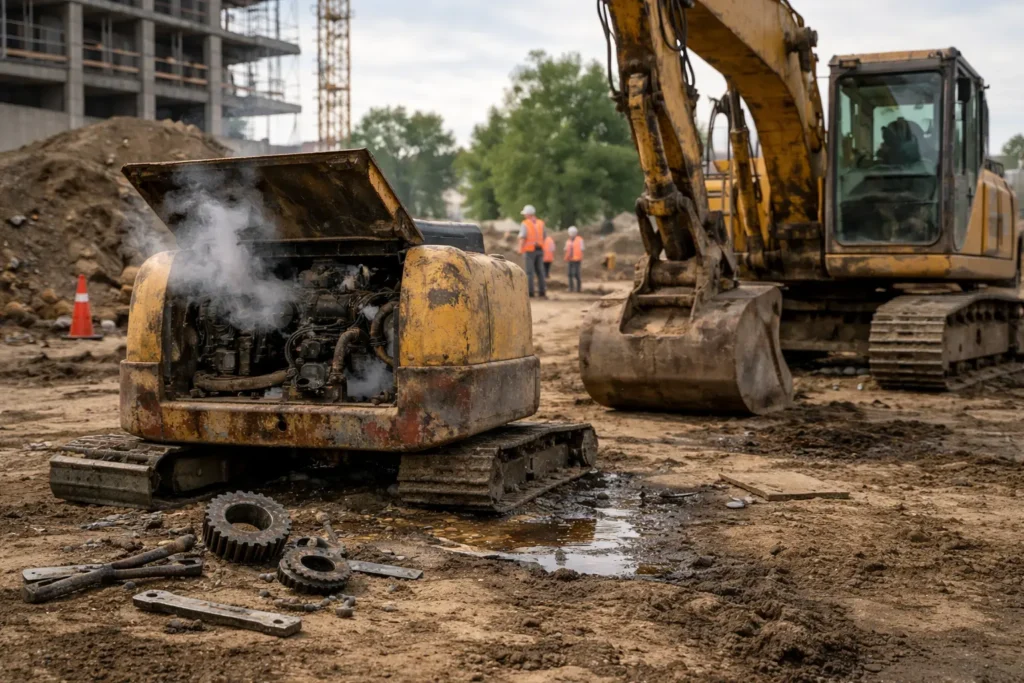
Let’s look at two of the biggest issues.
Lower Quality Materials Wear Out Faster
Budget parts often use inferior steel or rubber that breaks down quickly under heavy use. You might get six months from a cheap track, while a quality one lasts two or three years on the same machine.
And if you’re working in harsh conditions like mud, rocks, or constant moisture, that breakdown speeds up even more because the material simply can’t handle the stress.
Poor Fitment Damages Surrounding Components
Parts that don’t fit properly create stress points on connected components like sprockets, idlers, and rollers. Even small gaps or parts that sit slightly crooked cause extra vibration, and over time, that vibration wears down your bearings and seals faster than normal.
The real problem is the domino effect. One ill-fitting part puts strain on the next, and before you know it, you’re replacing half the undercarriage instead of one component.
How Does Equipment Failure Affect Your Bottom Line?
When a cheap part fails mid-job, the financial hit goes well beyond the replacement cost (and that’s not counting the headache of rescheduling your whole week). And when that happens, you may focus on the upfront price, but the real expense shows up later.
Here’s a quick comparison between cheap and quality parts to help you understand the extent of the potential damage.
| Factor | Cheap Parts | Quality Parts |
| Upfront cost | Lower | Higher |
| Lifespan | 6-12 months | 2-4 years |
| Replacement frequency | 2-3x more often | Standard intervals |
| Emergency repair risk | High | Low |
When you factor in rush delivery fees, after-hours labour rates, and the cost of emergency repairs, a single failure can wipe out any savings you thought you had. Plus, budget parts that fail twice end up costing more money than one quality part that lasts the full job.
Why Does Unplanned Downtime Cost More Than the Parts?
Unplanned downtime costs more because you’re paying for idle equipment, waiting crews, and missed deadlines all at once.
Every hour your excavator sits idle is an hour you’re not billing the client, and those lost hours stack up. And a week of downtime waiting for a replacement part can cost more than what the machine earns in a typical month.
Believe it or not, the parts themselves are often the cheapest part of a breakdown. The bigger expenses come from delays that push project timelines back and eat into your contracts. If you’re working under tight deadlines, those delays can also trigger penalty fees that hurt far more than the repair bill.
What’s more, your operators and crew still need to be paid even when the equipment isn’t running (your crew doesn’t stop costing money just because the machine isn’t). Idle workers can’t always be reassigned when a breakdown happens mid-project, so you lose productivity twice.
How Does Preventive Maintenance Change With Cheap Parts?
As we’ve explained before, cheap parts throw off your maintenance schedule because they wear unpredictably and fail without warning. When you can’t trust a part to last its expected lifespan, planning becomes nearly impossible.
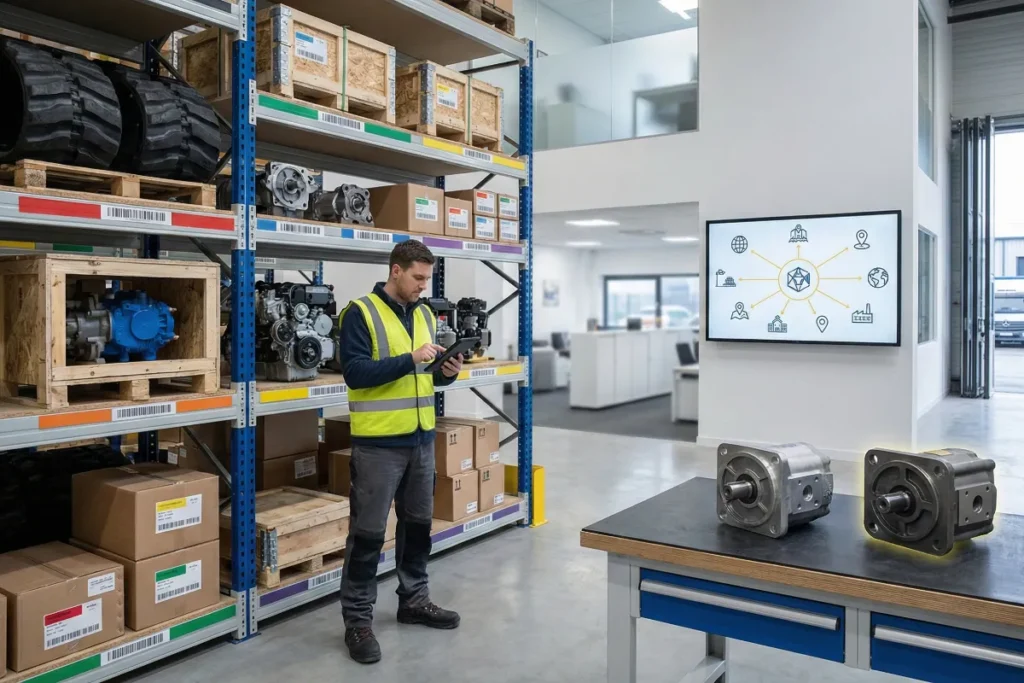
This creates two major headaches for equipment owners.
Service Intervals Become Unpredictable
Quality parts follow reliable wear patterns, which means you can plan service intervals with confidence. Cheap ones don’t give you that luxury because they tend to fail at random times.
Ultimately, your schedules fall apart when you’re always reacting instead of planning. And keeping up with OSHA’s equipment safety standards becomes harder when your parts don’t perform consistently.
Technicians Spend More Time Troubleshooting
Inconsistent part quality means your mechanics spend longer diagnosing problems and chasing down root causes. That extra diagnostic time leads to higher labour bills and longer periods with machines out of service.
Experienced technicians often recognise cheap part failures quickly, but they still need time to confirm the issue and source a proper replacement.
What Do Market Rates Say About Part Quality?
When a price sits far below market rates, the manufacturer likely cut costs somewhere important. You need to understand where those cuts happen, so you spot a bad deal before it’s too late.
Below-Average Prices Signal Corners Cut
Common shortcuts include thinner materials, skipped heat treatments, and cheaper manufacturing methods. These savings at the factory translate directly into shorter lifespans on your job site. That reality leads to an important question: What are you really getting for that discount?
Well, in most cases, a 50% price cut delivers about 50% of the performance and lifespan you actually need.
OEM and Aftermarket Have Different Value Points
OEM parts come with brand premiums, but they also provide exact specifications and consistent performance standards. Quality aftermarket suppliers offer similar durability at better prices without sacrificing material quality, so they’re worth considering if you find the right one.
Fortunately, a trusted supplier can help you distinguish between aftermarket parts that truly meet OEM specifications and those that only look the part.
How Can Most Equipment Owners Buy Smarter?
Buying smarter comes down to two things: knowing the real cost of a part before you buy it, and working with suppliers who can guide you in the right direction.

Let’s break down each so you can make an informed choice every time.
Calculate the Total Cost of Ownership First
Before you buy any part, add up the purchase price, expected lifespan, labour for installation, and potential downtime costs. This is called total cost of ownership, and it’s the only way to compare parts fairly.
A part costing twice as much but lasting three times longer will save money over the life of your equipment. So you need to run the numbers to see past the sticker price and focus on what the part will actually cost you in the long run.
Build Relationships With Trusted Suppliers
Reliable suppliers help you source quality parts quickly, and they often offer better pricing for repeat customers. From our experience working with operators from Long Island City to Sunset Park, we’ve seen which aftermarket brands hold up and which ones to skip.
A good supplier relationship also means faster service when you need emergency parts delivered. This can make the difference between a one-day delay and a week of lost contract work.
Are Long-Term Costs Worth the Short-Term Savings?
Long-term costs from cheap parts almost always outweigh whatever you saved at the register. When you factor in faster wear, equipment failure, unplanned downtime, and unpredictable maintenance schedules, the “deal” stops looking like one pretty quickly.
The better move is to think about the total cost of ownership before you buy. A quality part might cost more upfront, but it keeps your equipment running, your crew productive, and your project deadlines on track.
That’s the kind of return that actually protects your business in the long run.