
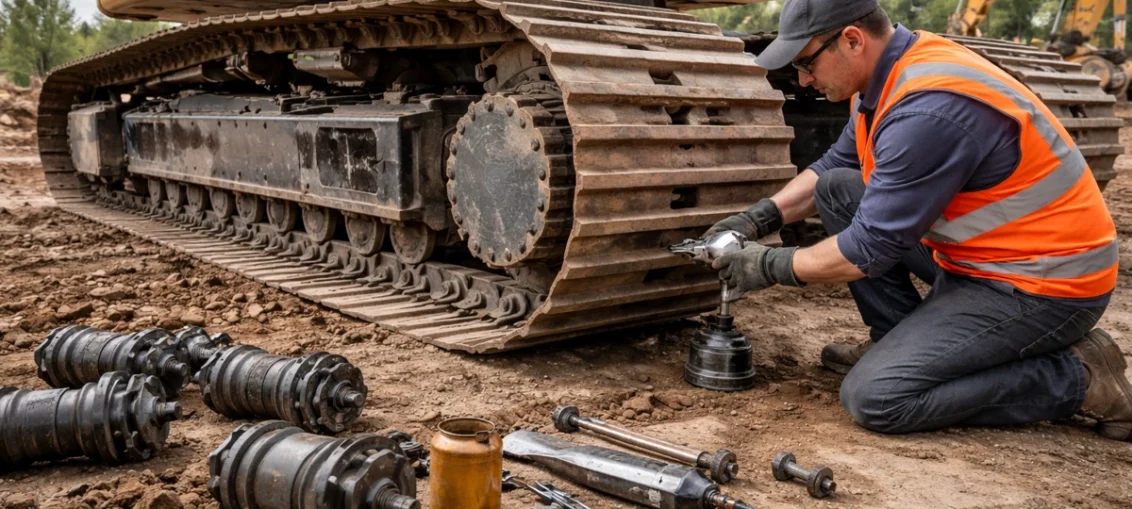
When undercarriage parts fail early, it is often due to everyday work conditions and maintenance habits, and not bad luck. These components are also the fastest-wearing parts of heavy equipment. So, knowing why this happens can help you avoid breakdowns, reduce downtime, and save money on repairs.
Problems with the undercarriage account for roughly 50% of all track machine maintenance costs, according to an industry report. That means half your maintenance budget goes to one system alone.
In this article, we’ll cover the inspection routines that catch $200 problems before they become $15,000 emergencies. You’ll find out why undercarriage components fail early, which excavator parts break down first, and the daily maintenance mistakes that speed up wear.
Let’s begin with the reason undercarriage components wear out.
Why Do Undercarriage Components Wear Out So Fast?
Undercarriage parts fail early because of three main factors: terrain stress, operator mistakes, and poor cleaning routines. Most contractors don’t realise this until it’s too late, but these issues compound over time and create major breakdowns.
Take a look at what causes the damage.
Uneven Terrain and Side Hill Work
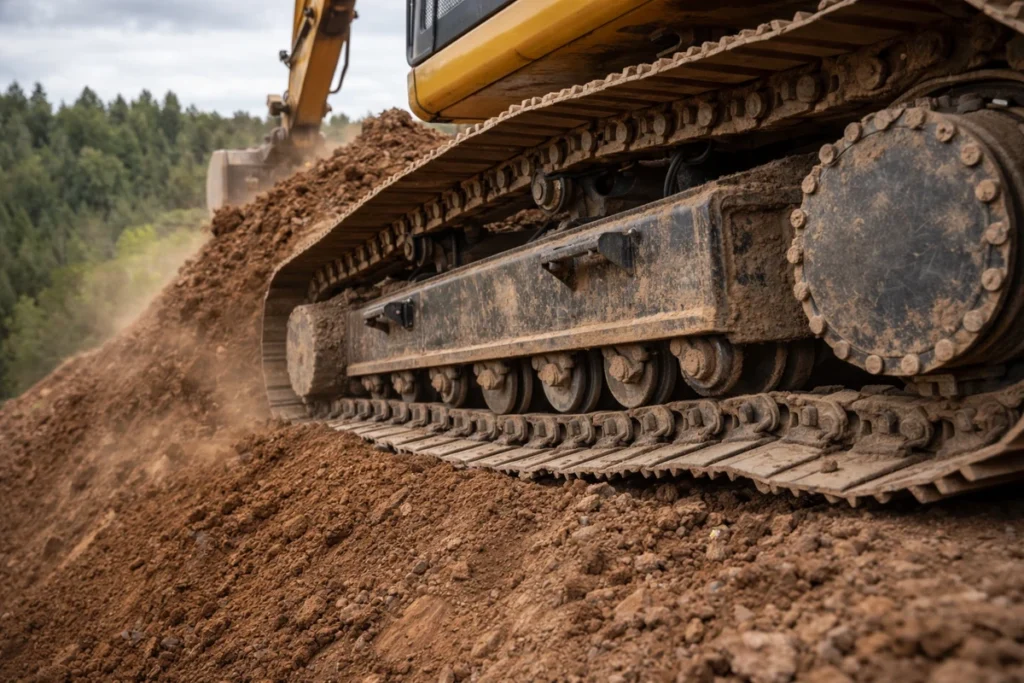
Sidehill operations usually carry all the weight to one side of your excavator. Which means the lower track components wear down twice as fast as the upper side. The reason crown work causes so much damage is that it forces extra pressure onto inboard parts like inner links and roller treads.
Similarly, when you’re working downhill, the load moves forward and puts all that stress on your front idlers and rollers instead of distributing it across the entire undercarriage. That creates uneven wear patterns you won’t notice until something breaks.
Overloading Beyond Equipment Capacity
Lifting materials heavier than your excavator’s rated capacity damages both the hydraulic systems and undercarriage at the same time (pushing limits can injure your crew, too).
On top of that, if operators scoop at unnatural angles, bend the pins and bushings, it can cut the typical 7,000 to 10,000-hour lifespan down by thousands of hours.
Debris Buildup Between Track Rollers
Mud, rocks, and demolition debris pack between the links and bushings, and it stops them from moving the way they’re designed to. And once that material hardens or freezes, it creates constant friction that grinds down grouser ends and link surfaces throughout every move.
Plus, debris that gets trapped near the sprocket teeth throws off the alignment and creates uneven tension across your entire track. This is why regular cleaning is one of the easiest ways to avoid expensive replacements.
Which Excavator Parts Fail First?
Track rollers take the most punishment from constant ground contact and weight distribution changes during work. Over our three decades supplying parts to contractors of Sunset Park and Long Island City, rollers account for more emergency orders than any other component we stock.
Along with that, sprockets and idlers wear faster when your machines work in abrasive materials like sand or gravel. The wear speeds up even more on sites with rocky soil conditions.
Meanwhile, links and bushings deteriorate quickly without regular lubrication, especially in high-hour machines that run multiple shifts. The reason these parts fail so often is that operators forget to grease them during daily checks. This habit leads to metal-on-metal contact that grinds away at the surfaces.
Daily Habits That Damage Undercarriage Maintenance
The frustrating part about undercarriage damage is that most of it comes from small daily mistakes that slip through the cracks. These habits seem harmless at first, but they add up to serious equipment failures later on.
Here are some routines you should avoid to increase your machine’s longevity:
- Skipped Morning Walk-Arounds: When operators skip their pre-shift inspections, they miss cracks in the links, loose bolts on the track shoes, and worn seals that leak hydraulic fluid. These small issues turn into breakdowns that stop work for days.
- Wrong Track Tension: Running your excavator with improper tension wears the rollers unevenly on both sides. Your machine also burns more fuel because it works harder to move, and you’ll notice the performance drop after just a few weeks of neglect.
- All-Day Debris Buildup: Most crews wait until the end of their shift to clean packed mud and rocks from between components. That debris hardens or freezes during breaks, and then grinds against your links and bushings for hours before anyone removes it.
- Grabbing the Closest Grease: Sometimes, whatever lubricant happens to be near the machine gets used instead of what the manufacturer specifies (we’ve all done that when we’re in a rush). However, wrong grease causes more friction and heat, and breaks down metal surfaces twice as fast as proper lubrication would.
Operators often develop these routines because they save time in the moment, but cost thousands in repairs later. But fixing these habits takes maybe 15 minutes per shift, compared to three days of downtime and the $8,000 repair bill.
Preventive Care Methods for Machine Longevity
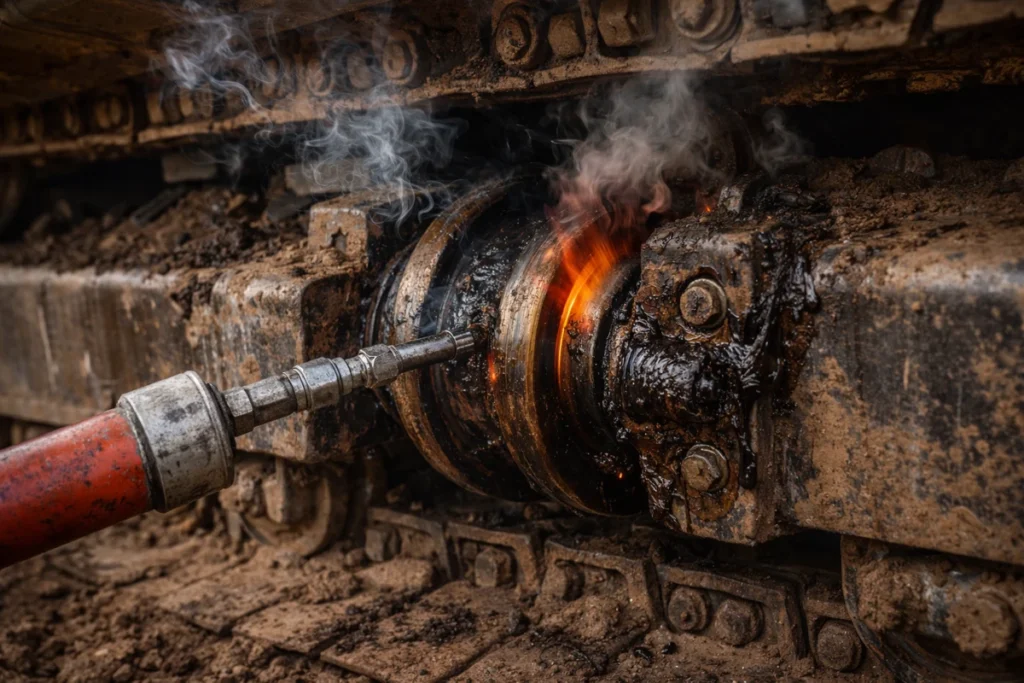
Three maintenance practices can significantly influence how long your undercarriage lasts: scheduled inspections, proper lubrication, and correct storage. These aren’t complicated procedures, but you need to maintain them consistently.
Let’s break down each of the methods to care for your machine.
Setting Up Scheduled Inspection Routines
Monthly inspections can catch unusual wear patterns before they turn into expensive component replacements that shut down your site. We suggest checking track tension regularly to prevent premature wear on the rollers. Doing this can reduce fuel consumption at the same time, which saves money on two fronts.
Along with that, pre-shift checkups can identify loose bolts, cracked seals, and other safety issues right away. So, instead of discovering them mid-job when someone gets hurt or a part fails, a quick inspection will save everyone from any unwanted events.
Using Manufacturer-Recommended Lubricants
This is where operators mess up without knowing it. Wrong lubricants increase friction between moving parts. Through our years working with excavation crews across Brooklyn and Queens, we’ve watched wrong lubricant choices shorten equipment life by years.
Proper grease application on pins and bushings can reduce equipment failures by up to 30%, but only if you’re using what the manufacturer specifies in the operating manual.
You also have to maintain the right amount of lubricant. Too much causes buildup that attracts dirt and debris, while too little creates metal-on-metal contact that grinds away at the surfaces.
Proper Storage During Idle Periods
Corrosion from humidity damages seals and metal surfaces when equipment sits unused for weeks between jobs. The moisture easily gets into places you can’t see and starts rusting components from the inside out.
Plus, extreme temperatures cause rubber components to crack and hydraulic fluids to degrade much faster than normal operating conditions would.
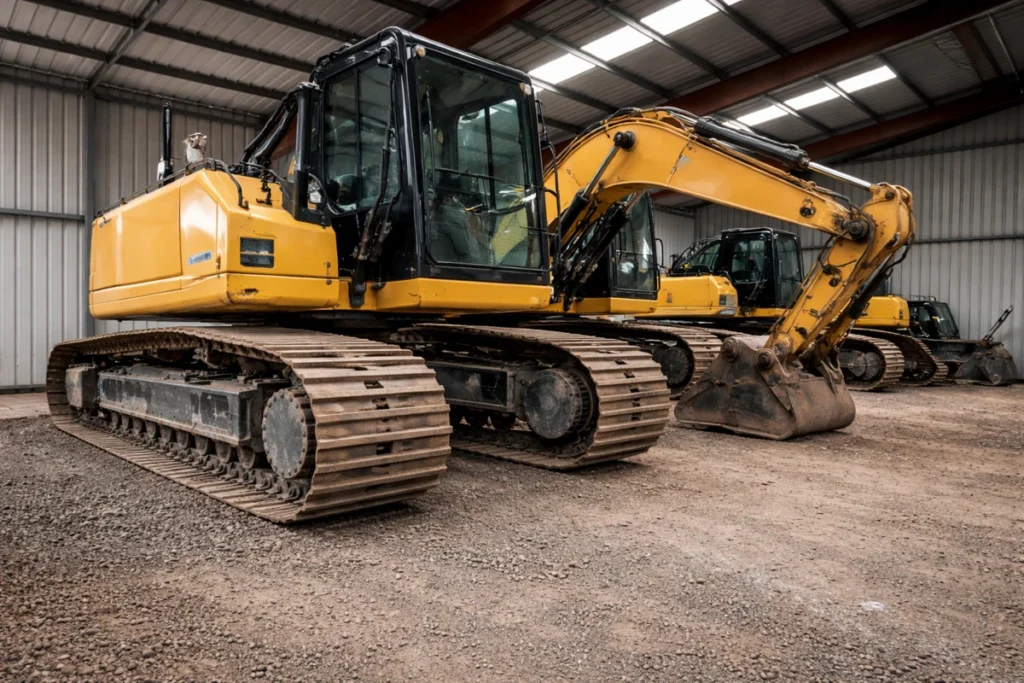
Consider covered storage because it protects your machines from rain and snow that can speed up rust on exposed parts. It keeps your undercarriage in working condition for the next job.
Operator Training Reduces Spare Parts Replacement
Did you know that random failures from operator error, improper installation, and machine overuse account for 82% of equipment breakdowns? Most contractors skip this step because they’re rushing to get jobs done, but training your operators the right way can cut your parts replacement costs by nearly half.
Here’s how you can train your operators:
- Proper Scooping Angles and Weight Limits: Teaching operators the correct angles for digging and the maximum weight capacity prevents bent pins and premature bushing wear. When crews understand how their actions affect the equipment, they naturally work within safe operating ranges.
- Recognising Early Warning Signs: Operators who know what to listen and watch for catch problems early. For example, unusual grinding noises, vibrations during movement, and changes in how the machine handles everything. These all signal issues that cost $200 to fix now instead of $15,000 later.
- Regular Refresher Courses: Safety protocols and maintenance procedures get forgotten over time without reinforcement. This is why scheduling training sessions every six months keeps the crew sharp. This simple step reduces accident-related damage to the undercarriage and maintains productivity across your entire site.
A well-trained operator can extend equipment life by years and keep your machines running. This initial time investment for training pays itself back after just one avoided breakdown.
Protect Your Investment With Better Maintenance
Terrain stress, overloading, debris buildup, and skipped maintenance routines directly contribute to undercarriage failures. But proper inspections and lubrication can catch these problems before they become expensive emergencies.
That’s why getting your maintenance routine down saves you from scrambling for parts during peak season. The contractors who stay ahead of these issues spend less time dealing with breakdowns and more time finishing jobs on schedule.
Bites Off Broadway keeps excavator components in stock for contractors. We’ve supplied the industry for over 30 years with durable spare parts that deliver the performance your equipment needs to keep running. So visit us when you need quality undercarriage parts fast.