
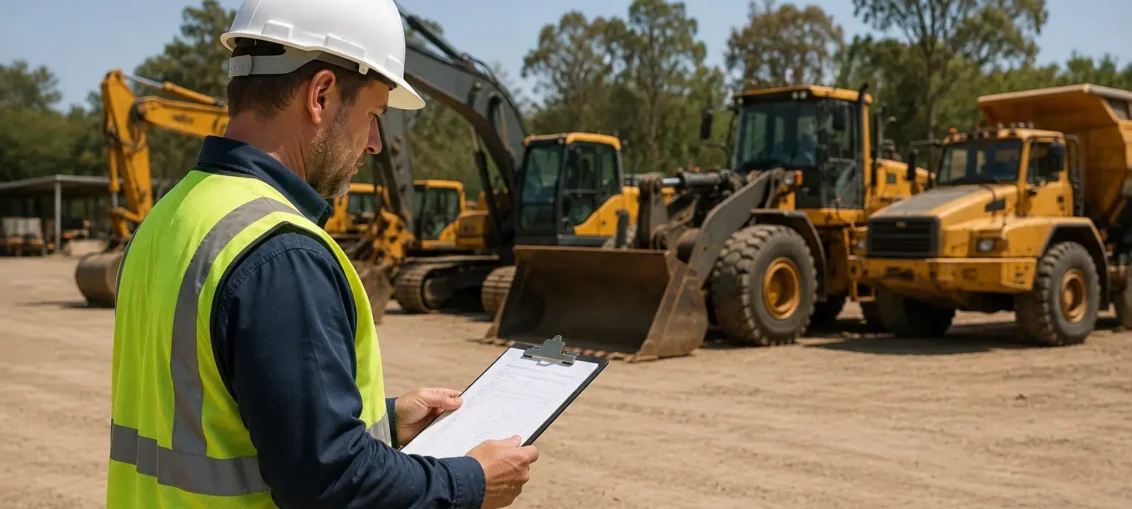
Reactive repair is the priciest way to run a fleet. You pay three times over: the part, the labor, and the day you lose. And because a preventive maintenance checklist puts that work on a date you pick, you replace a $30 filter instead of a $3,000 pump.
We’re Bites Off Broadway, and we’ve supplied undercarriage parts to contractors from Port Morris to Jamaica for three decades. Over that stretch, we’ve learned how early the warning signs turn up.
So, this guide hands you a maintenance checklist you can adapt to any excavator, dozer, or pickup you run, then hand to whoever starts it each morning.
From there we’ll work through the three tiers of a working list and a daily walkaround built on OSHA’s vehicle inspection checklist. The rest covers the parts that wear first, hour-meter scheduling, and the paperwork that keeps you compliant.
What Goes Into a Preventive Maintenance Checklist
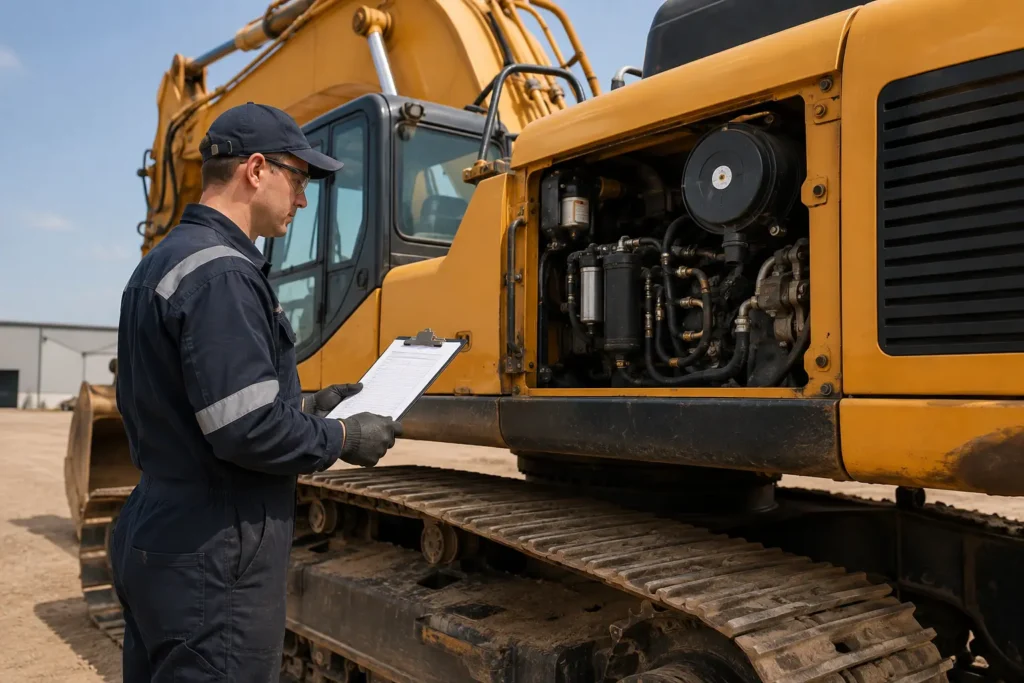
A preventive maintenance checklist names the fluid levels, wear parts, and safety systems to check on each machine. It also sets how often. Every entry falls into one of three tiers, and that sorting lets one sheet serve every machine in your fleet.
Here’s how equipment inspections split across them:
| Tier | How Often | What You Look At |
| Daily | Every shift | Fluids, leaks, tracks |
| Interval | By hour meter | Filters, hoses, fittings |
| Annual | Once a year | Structure, safety gear |
What lands in each tier shifts by machine, though. Track tension belongs on an excavator’s daily list, while a dozer’s structural welds only need a look once a year.
The 10-Minute Walkaround That Catches Leaks Early
Of the three tiers, the daily column does the heaviest lifting. Your operator checks the machine before it moves, since yesterday’s driver notices a change fastest.
Fluid puddles, loose track bolts, and weeping hoses all surface during these equipment inspections, often long before they strand a machine. Catch one then, and you swap a $40 fitting instead of towing the excavator home. And frankly, that’s the cheapest ten minutes of your week.
NIOSH says much the same in its guidance on construction equipment maintenance safety. Pickups and water trucks count as fleet vehicles too, so add them to the list (nobody ever claims the water truck).
Now, let’s look at which systems give out first.
Heavy Equipment Inspections: The Parts That Wear Out First
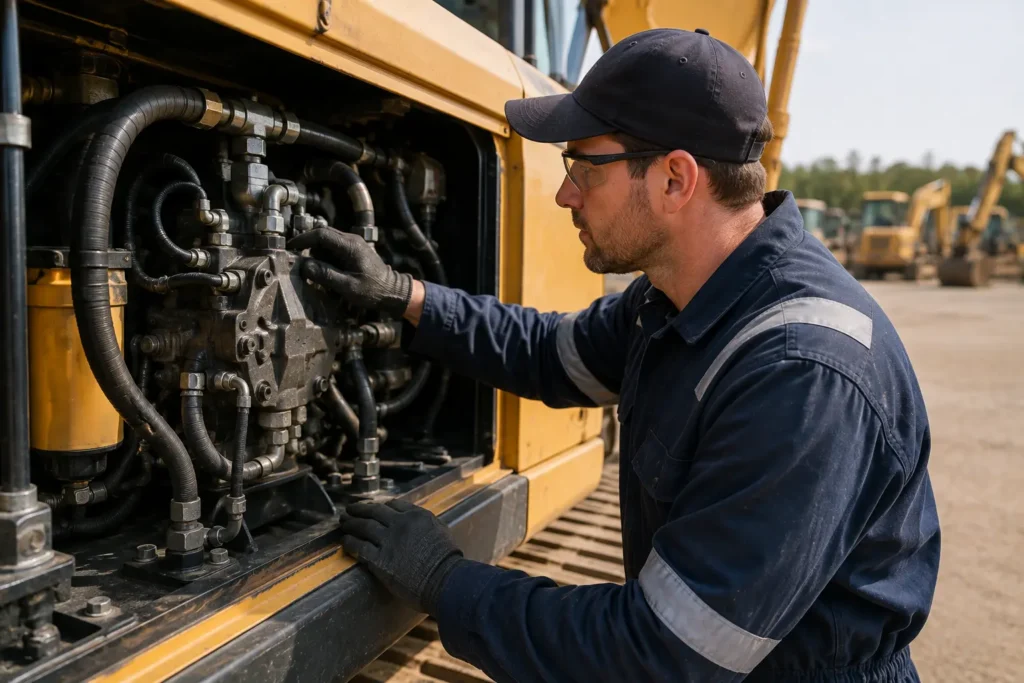
On a working excavator, four of them cause the bulk of unplanned downtime: the undercarriage, the hydraulics, the filters, and the cooling package.
Surprisingly, age doesn’t drive that ranking; load does. And the parts absorbing the heaviest load wear on a schedule you can predict.
Take them in that order, starting with the parts closest to the ground.
Undercarriage Parts Take the Hardest Hit
Rollers, idlers, and track chains grind against dirt all day, so heavy equipment inspections start here. Worn idlers don’t fail alone, either. The rollers, more often than not, carry load they were never built for, and they go early too. Regular undercarriage maintenance catches that chain reaction early.
Hydraulic Hoses and Cylinders
Check hoses next, since one seal weeping oil slows every function on the machine. We’ve shipped parts to New York contractors for thirty years, and hoses move off our shelves fastest. The reorder rate says where the stress lands.
Filters and Cooling Systems
Clogged filters choke oil flow, so operating temperatures climb. From there, the strain moves to your cooling systems, and a cracked radiator costs far more than the filter that caused it. So, put both on your interval list.
Allow the Hour Meter to Set Your Service Schedule
Your hour meter records run time, and run time is what grinds a machine down.
Picture two excavators bought the same week. One digs foundations in Port Morris five days a week, while the other sits parked for three weeks straight. Their build dates match, but their run hours differ by 400, so only one is due. Even so, plenty of outfits still service on the first.
And believe it or not, some pull near-new machines apart on a date the meter never called for. So, go by the meter and excavator service intervals land at 250, 500, and 1,000 hours (your operator manual sets the real figures, since duty cycle shifts them).
Inspection Forms and the Records That Keep You Compliant

Your inspection forms can help you turn that ten-minute walkaround into a record. We recommend keeping them somewhere safe, because OSHA expects the paperwork on site. And their construction safety compliance guidance sets out what to hold onto.
Three items make a form usable:
- Log the Basics Every Time: Date, hour reading, operator name, and every defect belongs on the sheet.
- Move to Digital Inspections: A phone-based form adds real-time tracking, so your foreman sees the defect before the shift ends.
- Keep the Trail Intact: Stored records prove you maintain compliance long after anyone remembers the repair.
Ultimately, none of that helps you until somebody else asks for proof. Fleets we supply who log every check settle insurance questions in days. The ones digging through a glovebox spend weeks on the same claim.
How Equipment Maintenance Fits Into Daily Fleet Management
A checklist and a schedule both need one person answerable for them. Split that job between two people and neither one reads the hour meters (we’ve fielded enough of those calls to know how the blame game ends).
There’s no way around it, either. One name goes next to the schedule, or the routine dies by week three. Try giving that person time for record-keeping as well, since fleet management runs on logs instead of anyone’s memory of last Tuesday.
Book the service dates early too. Planned downtime costs a morning, while a failure mid-dig costs the week. So stock filters, hoses, and rollers on the shelf, and equipment maintenance delays will shrink from days to hours.
Your Fleet Maintenance Plan Starts With One Checklist
You don’t need software or a fleet-wide rollout to start. Just pick your busiest excavator, print one sheet, and run the walkaround tomorrow morning.
Add a second machine once the first routine holds for a month. A daily check on three machines catches wear while it’s still a $60 hose, unlike the spreadsheet nobody has opened since April. Sooner or later those checks will turn up a worn roller or a weeping seal. So sort out choosing a reliable construction equipment parts supplier early, before a machine sits idle waiting on a part.
Our specialists at Bites Off Broadway keep those parts in stock. Call us, and we’ll tell you which ones your fleet burns through fastest, then get them to your yard.