
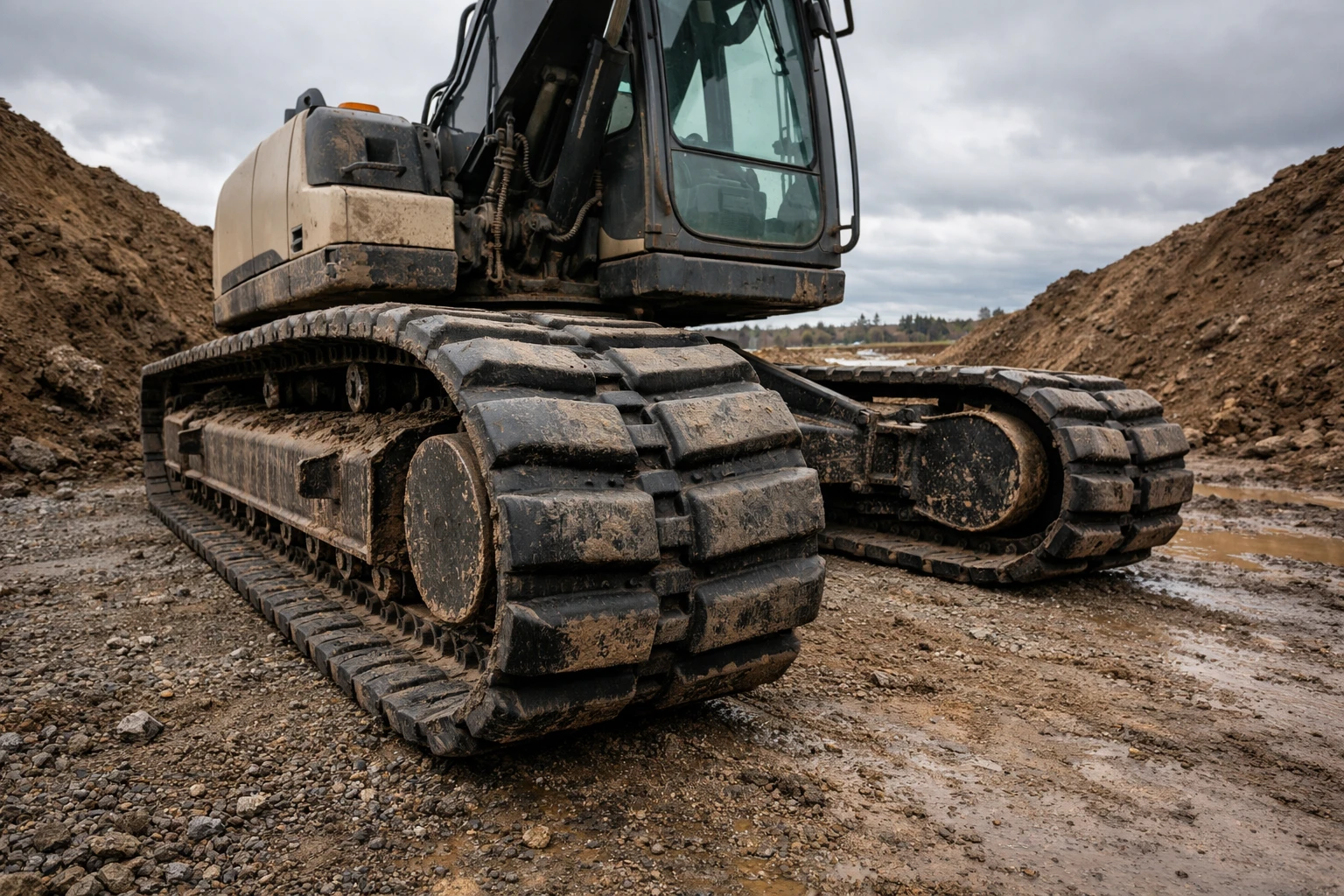
Choosing the right rubber tracks for your excavator comes down to three things: tread pattern, track width, and construction quality. Each one affects how well the tracks handle your terrain, fit your machine, and hold up under your workload.
But many contractors pick tracks based on price or what’s in stock. That choice often leads to problems like the wrong tracks wearing out faster, losing traction when you need it, and leading to avoidable repairs.
This guide walks you through measuring your current tracks, understanding tread patterns, matching tracks to terrain, and spotting the construction features that make tracks last. By the end, you’ll know exactly what to look for before you buy.
Let’s dive in.
Why the Right Rubber Tracks Improve Performance and Uptime
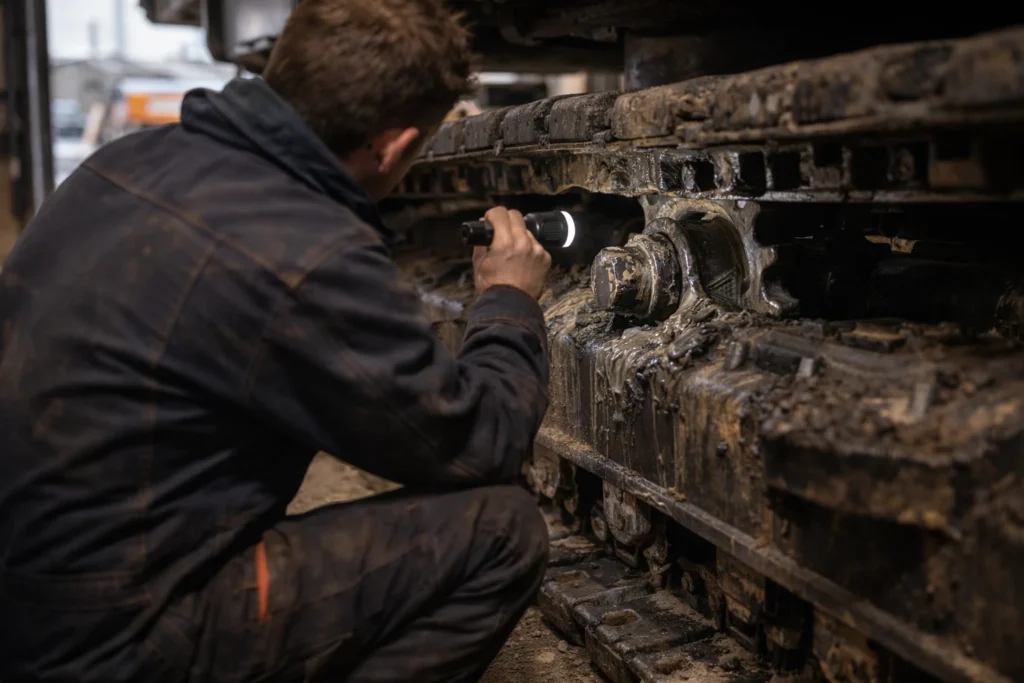
The right rubber tracks keep your excavator running at full performance by matching traction, weight distribution, and vibration control to the job. When tracks match your terrain and machine weight, the excavator uses less fuel and completes cycles faster, meaning you’re moving more dirt per hour without pushing the engine harder.
Mismatched tracks, however, create the opposite problem. They wear out faster because they’re working in conditions they weren’t built for, and the extra friction damages rollers, sprockets, and idlers. Maintenance costs climb as a result. But the worst part is downtime. When tracks fail mid-job, you’re left with idle equipment and delays you can’t bill for.
Measuring your current tracks and checking compatibility before you buy prevents these problems from the start. You can also reduce failures by following a regular excavator maintenance routine.
Measuring Rubber Tracks and Checking Compatibility
Before ordering replacement tracks, make sure you have three measurements: width, pitch, and link count. Excavator tracks are sold by these specifications, and all three must match your machine exactly.
Here’s how each one works:
- Track width in millimeters (the measurement across the face of the track)
- Pitch in millimeters (the distance between the center of one lug and the center of the next)
- Link count (the total number of links around the entire track)
Most tracks have these numbers molded into the inside surface where the drive sprocket engages. If the numbers have worn off or you can’t read them, check your equipment manual under the undercarriage specs section.
You can also measure the width with a tape measure and count the links manually. Just make sure the pitch is exact, or the track won’t engage the sprocket properly.
Once you have the measurements, the next step is confirming your machine can handle the track type you’re buying. This is especially important when switching from steel to rubber tracks, since not all machines support this swap.
Track Width, Stability, and Ground Pressure Explained
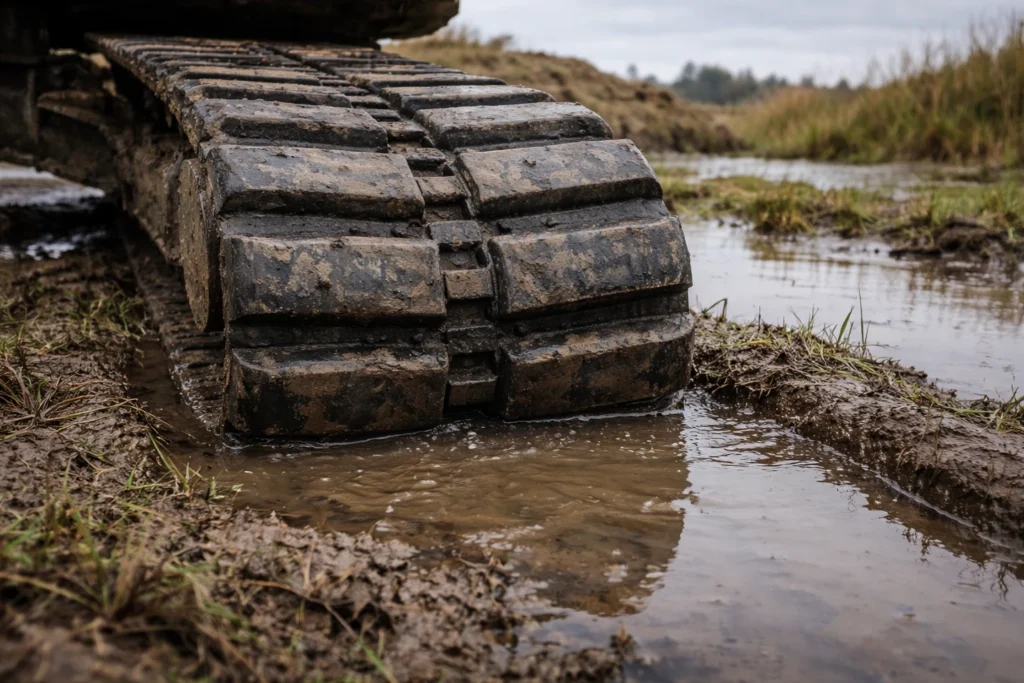
Track width determines how your excavator’s weight is spread across the ground. Wider tracks do this by distributing the machine’s weight over a larger area, which reduces ground pressure on soft surfaces like mud, turf, or sand. This keeps you working on marshy ground or finished lawns without leaving deep ruts.
Narrow tracks work the opposite way. They let you make tighter turns in confined spaces like residential job sites or between buildings, which makes maneuvering easier when space is tight. But you lose flotation. Narrow tracks put more weight per square inch on the ground, so stability drops on soft surfaces and you risk getting stuck.
Choosing the right width depends on your work conditions. If most of your job takes place on solid ground or in tight quarters, narrow tracks are ideal. For wet, loose, or sensitive surfaces, wider tracks keep your machine moving safely and efficiently.
Rubber Track Tread Patterns: Choosing the Right Grip
When you pick the wrong tread pattern for your job site, it can reduce traction and wear out your tracks faster. Because tread patterns determine how rubber tracks grip the ground, shed debris, and perform under different conditions. The most common patterns include:
- Block tread
- Straight bar and multi-bar
- C-pattern
- Zig-zag
Each one is built for different terrain and job types. Let’s break down how they perform.
Block Tread for General Construction Work
Block tread is the most common pattern you’ll see on job sites because it works well across a variety of surfaces. It features large rectangular pads arranged in straight or staggered rows, which provide reliable grip on gravel, asphalt, clay, and finished lawns without damaging the ground.
Straight Bar and Multi-Bar for Muddy Conditions
If you work in wet or muddy terrain, straight bar tread is built for the job. Its thin, continuous pads dig into the ground for traction, and there’s a stronger version called multi-bar tread that adds a second row of slim pads.
The extra row reduces wear when you’re crossing flat, hard surfaces between muddy jobs. Both patterns help prevent your excavator from getting stuck, but neither holds up well on rocky or frozen terrain, where the thin pads can tear.
C-Pattern Tracks for Slopes and Rocky Terrain
For slopes and demolition work, C-pattern treads are better. They have two rows of C-shaped pads that grip uneven ground and loose rock, giving better traction and reducing side-to-side sliding. For tougher jobs, however, premium versions add reinforced pads to resist tears and cuts. Some of these tracks are rated for 1,000 hours, depending on terrain and operator care.
Zig-Zag Tread for Snow and Wet Ground
Zig-zag tread uses a stepped design that clears out mud and snow as the track rotates. The pattern reduces vibration and stops side sliding, which makes it a solid choice for snow removal.
It also works well on clay and wet slopes, but it isn’t built for demolition or turf protection.
Best Rubber Tracks for Different Terrains
Different terrains demand different track designs. Matching your tracks to ground conditions extends their lifespan and keeps your equipment productive. Here’s how to choose:
- Mud and Wet Ground: You need tall, aggressive treads like straight bar or zig-zag patterns. These bite through soft surface layers to reach firmer ground underneath, preventing your machine from sinking or losing traction in saturated soil.
- Rocky Terrain: Durability is the most important here, so look for reinforced tracks with C-pattern or premium block treads that use thicker rubber compounds. The reinforced construction resists cuts and tears from sharp edges that would destroy standard tracks quickly.
- Turf and Pavement: Low-profile multi-bar tracks distribute weight evenly across the surface, preventing deep marks that damage lawns or leave visible impressions on pavement. This makes them ideal for landscaping work or jobs near residential areas where surface damage costs you.
- Frozen or Icy Ground: When temperatures drop, deep biting treads like zig-zag penetrate the hard surface and reduce sliding. The stepped design helps the tracks grip even when the ground turns slick.
The right track-to-terrain match prevents premature wear and keeps your undercarriage components from taking unnecessary damage. Pick the wrong type, and you’ll face faster track replacement, reduced traction, and costly downtime.
What Makes a Durable Rubber Track
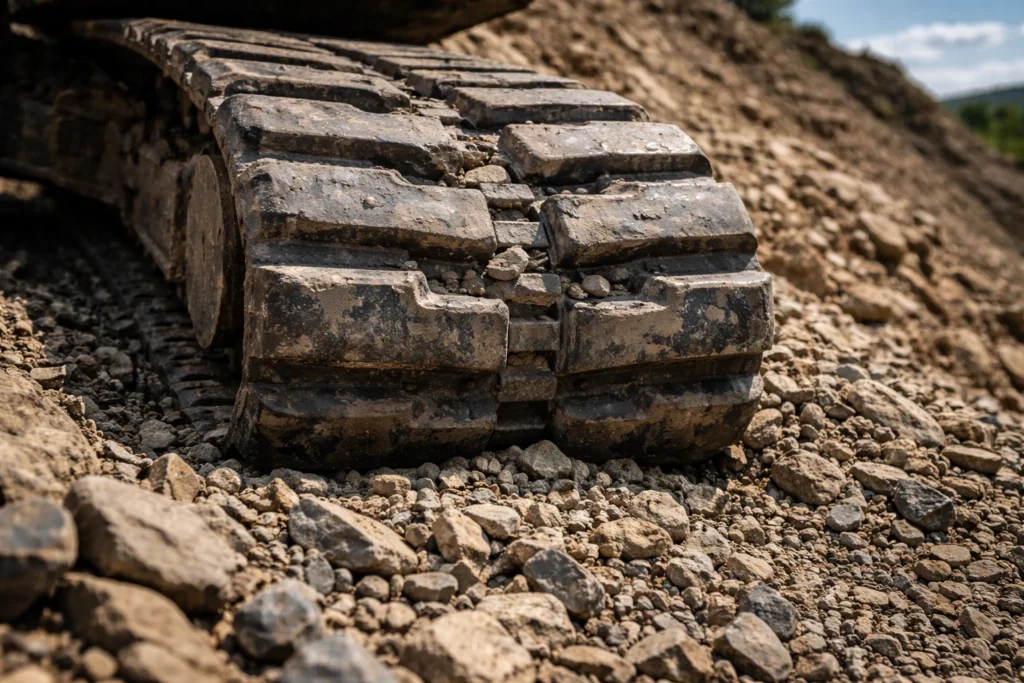
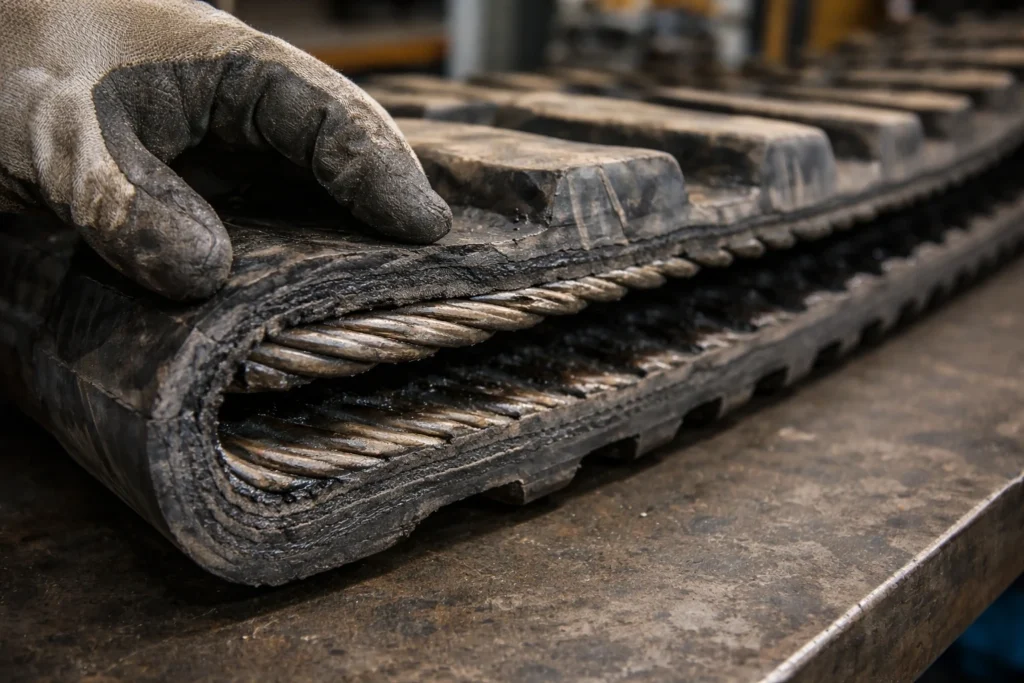
Quality rubber tracks use internal steel cable reinforcement to stop stretching under heavy loads. The cables run the length of the track and keep it from elongating when the excavator pulls against resistance or climbs steep grades. Without that reinforcement, tracks stretch out of spec and start slipping off the sprockets.
While the cables prevent stretching, the rubber compound protects against cuts, cracks, and UV damage in harsh weather. Higher-grade compounds take this further by staying flexible in the cold and not cracking when exposed to the sun and heat.
Beyond the rubber and cables, embedded drive lugs transfer power more efficiently than molded lugs. Because they’re bonded into the track structure, they hold up under heavy use, while molded lugs can peel off, especially on abrasive surfaces or during sharp turns.
When these features work together, you can expect 400 to 2,000 hours, with most tracks lasting 800 to 1,500 hours, depending on terrain, operator habits, and maintenance.
Pro tip: Work gently on soft surfaces and avoid grinding constantly on rock or asphalt to maximize lifespan.
Get the Right Tracks and Keep Your Excavator Running Longer
The right rubber tracks extend your excavator’s uptime, reduce repairs, and handle terrain without fighting against it. When you match tread pattern, width, and construction quality to the work you’re doing, tracks last longer and cost you less over time.
Start by measuring your current excavator tracks and noting which tread patterns suit your job sites. Then check for construction features like steel cable reinforcement and embedded drive lugs. These details separate tracks that last from tracks that fail early.
If you need help finding the right track for your machine, Bites Off Broadway has been supplying contractors across New York with excavator undercarriage parts for over 30 years. We can help you match the right tracks to your equipment and terrain for longer track life and fewer breakdowns.