
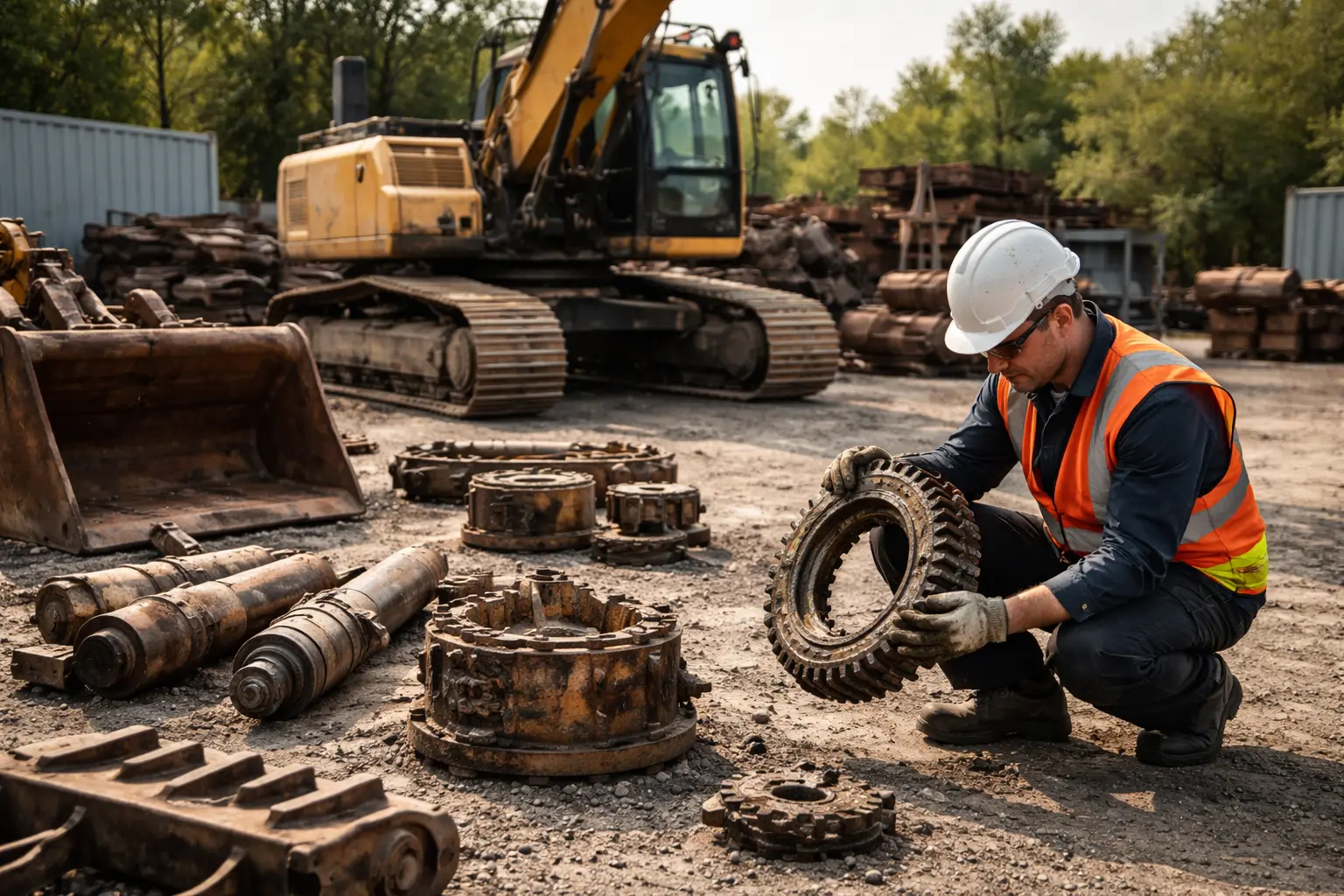
Before you hand over money for used excavator parts, you must inspect the physical condition, confirm the fit, verify the part numbers, and clarify the warranty terms.
If you skip any one of those, you’ll take on a risk that could cost far more than the part itself. Most of these issues aren’t obvious at first glance, and that’s exactly where buyers get caught off guard.
After years of supplying heavy machinery parts to contractors across New York, we know what separates a solid buy from a costly mistake. So here’s what to check before any money changes hands.
Why Do So Many Buyers Get Burned on Used Heavy Equipment Parts?
Most buyers get burned because they move too fast and inspect too little, especially when a machine is already sitting idle on the job.
Let’s look at the most common reasons it goes wrong:
- Misrepresented Condition: Many sellers list heavily worn components as “good used condition,” and without a hands-on inspection, there’s no way to tell. A part that looks fine in a photo can have serious internal wear that only shows up after installation.
- Urgency Overrides Judgment: Frankly, a lot of these purchases happen under pressure. The machine is down, the job can’t wait, and suddenly “good enough” starts to sound reasonable (that’s a risk few operations can afford).
- Compatibility Gaps: Even experienced operators get caught with incompatible parts. It usually comes down to skipping the verification step, and a part pulled from a different machine from a different year can look identical, but still be the wrong spec for your equipment.
Now, let’s look at what a proper inspection actually covers, because knowing what to check changes everything about how you buy.
What Does a Proper Equipment Inspection Actually Cover?

A proper equipment inspection covers the physical condition of the part, its dimensional fit, and any history of repairs. Getting all three right is what keeps a cost-saving purchase from turning into an expensive fix.
Here’s what each of those areas actually involves.
What to Look for on the Surface
A part can look perfectly fine from three feet away and still be weeks away from failure. Cracks, corrosion, and uneven wear patterns all signal a part is near the end of its service life, so check the entire surface, instead of just the most visible side.
For metal parts, however, you should pay close attention to pitting or deep scoring on contact surfaces. Parts with that kind of scoring almost always ran dry at some point, and in our experience, the wear underneath is usually worse than what’s visible on the surface.
Rubber components like track pads should also be checked for chunking, tearing, or hardening, because dried-out rubber fails faster once it’s back under load.
How to Confirm the Part Actually Fits
Fit and compatibility issues are one of the most common reasons used parts get returned, and most are completely avoidable.
So always verify part numbers against your equipment’s make, model, and year before purchasing. A part that looks right can still be the wrong spec. A final drive pulled from a similar excavator model, for instance, can have a slightly different bolt pattern that makes installation impossible.
That’s why bringing callipers or reference measurements when buying in person is always worth the extra step.
And for a complete field framework, the SafetyCulture excavator inspection checklist covers structural, mechanical, and hydraulic components in a format you can take on-site.
What Can Inspection Data Tell You About Heavy Machinery Components?
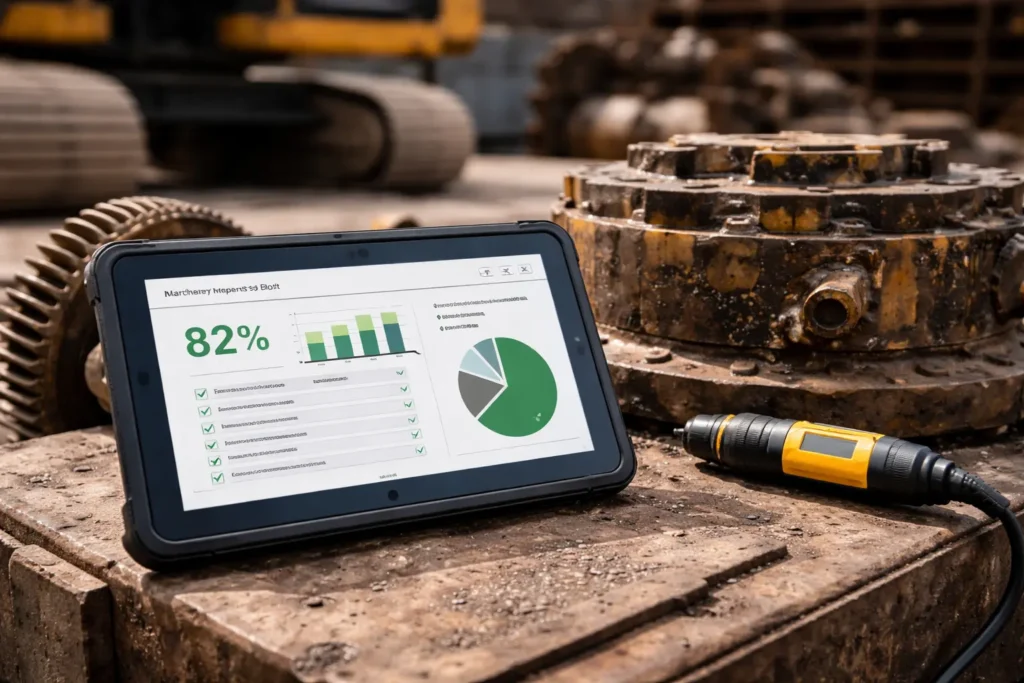
A part’s physical condition only tells half the story. What’s been done to it before you showed up tells the other half, and inspection data is how you fill in that gap.
Now, there are a few things to look for when the part’s history is just as important as its current state.
| Red Flag | Acceptable Condition |
| Weld marks or filler material on structural parts | Clean welds from original manufacturing only |
| Paint overspray covering joints or seams | Uniform factory finish throughout |
| Mismatched or scratched-off serial numbers | Clear, consistent numbers matching manufacturer records |
| Undisclosed modifications to mounting points | Original mounting points intact and unmodified |
Any of these red flags showing up during inspection should slow you down before the transaction goes any further.
Signs of Improper Repairs
Improper repairs on structural components create serious safety hazards on site, and the damage isn’t always visible without a close inspection.
When you spot these signs of prior repair work, ask the seller for documentation, because a repaired part isn’t automatically a bad buy, but undisclosed repairs are a different story entirely.
For hydraulic components, OSHA’s hydraulic system inspection bulletin outlines exactly what signs to look for before putting a part back into operation.
What Mismatched Equipment Parts Numbers Really Mean
Serial numbers that are scratched off, stamped over, or missing often point to stolen or counterfeit parts (mismatched numbers are more common in salvage yard pulls than most buyers realize).
What’s more, inconsistent part numbers across a component suggest a mismatched assembly or incorrect replacement history, both of which affect how the part performs under load. To avoid that risk, always cross-reference part numbers with manufacturer documentation or use a tool like Equipment Watch to verify asset history before committing to a purchase.
What Should You Know About Used Excavator Parts Warranties?
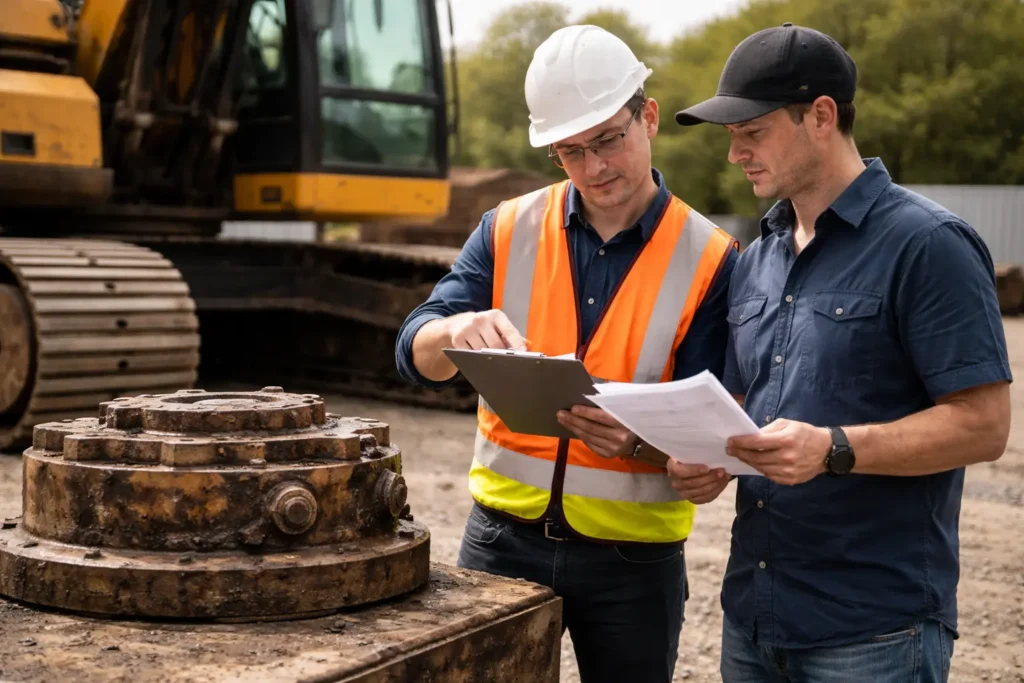
When buying used excavator parts, the warranty terms tell you two things: what the seller will cover, and how much they actually trust the part they’re selling.
So, before you commit to any purchase, here’s what to understand about warranty terms and what they actually tell you.
What a Real Warranty Should Cover
A vague one-liner about “coverage” looks nothing like a warranty that actually protects you, and sellers know the difference even if buyers don’t always catch it. A solid warranty covers defects in the part itself, instead of just damage caused after installation.
We recommend looking for warranties that specify the coverage period, what’s included, and the return or replacement process, because those details are what separate a real guarantee from a marketing phrase.
Typically, reputable sellers stand behind their parts with at least a 30 to 90 day coverage window (a “lifetime warranty” from a seller you found on Craigslist is doing a lot of heavy lifting as a phrase).
When a Seller Offers No Warranty at All
If a seller can’t put even a 30-day warranty behind what they’re selling, that’s likely a confidence problem on their end, and it’s worth taking seriously.
No warranty usually doesn’t always mean a bad deal, but it does mean you carry all the risk. That’s why you should ask directly why there’s no warranty, because some sellers genuinely haven’t inspected the part well enough to stand behind it.
And if the price seems too low on top of that, treat the combination as a serious red flag.
Are Aftermarket Excavator Parts a Smarter Buy Than Used OEM?
Aftermarket excavator parts are often the better buy, especially for high-wear components where availability and price mean more than brand origin. That said, used OEM still has its place depending on the component and the machine.
Let’s look at how the two options stack up.
Where Aftermarket Parts Have the Edge
Aftermarket excavator parts are manufactured to meet or exceed OEM specs, often at a significantly lower price point.
Availability is another practical advantage, since aftermarket suppliers stock components for older machines that OEM no longer supports, and that alone saves a lot of time on older job equipment.
On top of that, we’ve seen aftermarket rubber tracks and sprockets hold up just as well as OEM on active sites, sometimes better, especially when the machine is running hard every day.
When OEM Used Parts Are Worth the Hunt
There are, however, specific situations where tracking down a used OEM is absolutely worth the extra effort.
For precision components like hydraulic pumps or final drives, used OEM parts offer tighter tolerances, and that precision makes a real difference in how the part performs over time.
Believe it or not, some older John Deere, Cat, and Komatsu machines have fits so specific that even well-made aftermarket parts fall short of the original tolerances.
Bottom Line: If you find a used OEM in genuinely good condition, it can outlast a new aftermarket equivalent on those types of components.
Stop Guessing and Pay for Heavy Equipment You Can Trust
Buying used parts pays off when you know exactly what you’re looking for. The inspection process, the warranty terms, and the part history all work together to give you a clear picture of what you’re actually getting.
Once that’s established, the decision becomes a lot less stressful.
At Bites Off Broadway, we stock quality used and aftermarket excavator parts and can help you identify the right components for your machine before you spend a dollar. If you’re working on a job in Port Morris, Sunset Park, or anywhere across New York, reach out, and we’ll point you in the right direction.