
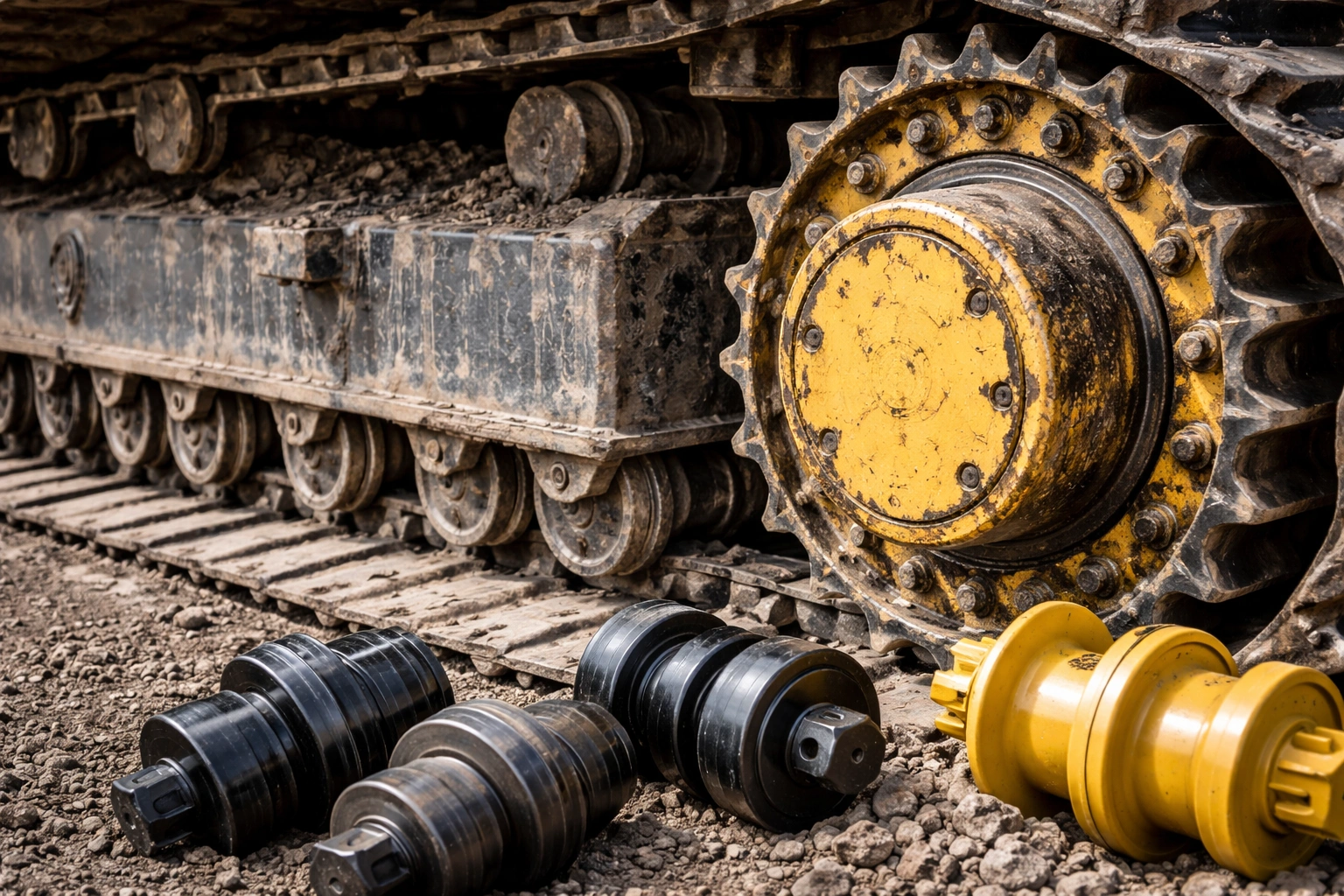
Track rollers wear out first on most excavators, and usually show flat spots within 1,500-2,000 hours under tough conditions. However, proper track tension and daily cleaning separate machines that last 6,000 hours from those that fail at 3,000.
In fact, undercarriage components account for more than 50% of an excavator’s total maintenance costs over its lifetime. Most operators miss early warning signs like uneven wear patterns and minor oil leaks around track adjusters. As a result, major damage shows up before anyone notices the problem.
In this article, we’ll cover which undercarriage parts fail first. You’ll also learn about the visual signs that signal replacement, and simple daily habits that prevent costly repairs.
Let’s find out the best way to care for your undercarriage.
Why Your Excavator Undercarriage Takes the Hardest Hit
Your excavator’s undercarriage handles more punishment than any other part because it supports the entire machine’s weight while constantly scraping against rocks, dirt, and debris. Hour after hour, these metal components grind down from the contact.
Take a look at the core parts and what causes them to fail.
The Core Undercarriage Parts Every Operator Should Know
Undercarriage components work together constantly as moving parts in the system. This is what each of them does:
- Track shoes spread the machine’s weight evenly across the ground
- All the components stay connected through heavy-duty chains
- When the tracks rotate, rollers reduce friction
- Forward motion comes from the drive sprockets pushing the track along
- Beneath the frame, bottom rollers carry the machine’s load during operation
- Idlers guide the track and keep it aligned
- And track tension components keep everything tight
Because they’re all connected, when one component wears down, it also damages the parts around it faster.
How Terrain and Load Affect Undercarriage Wear
Rocky terrain and abrasive surfaces grind down track shoes faster than soft dirt or paved ground conditions. Similarly, wet or muddy conditions cause debris buildup that freezes in cold weather (especially in New York winters). If operators don’t clean packed dirt off daily, premature wear cuts equipment life in half.
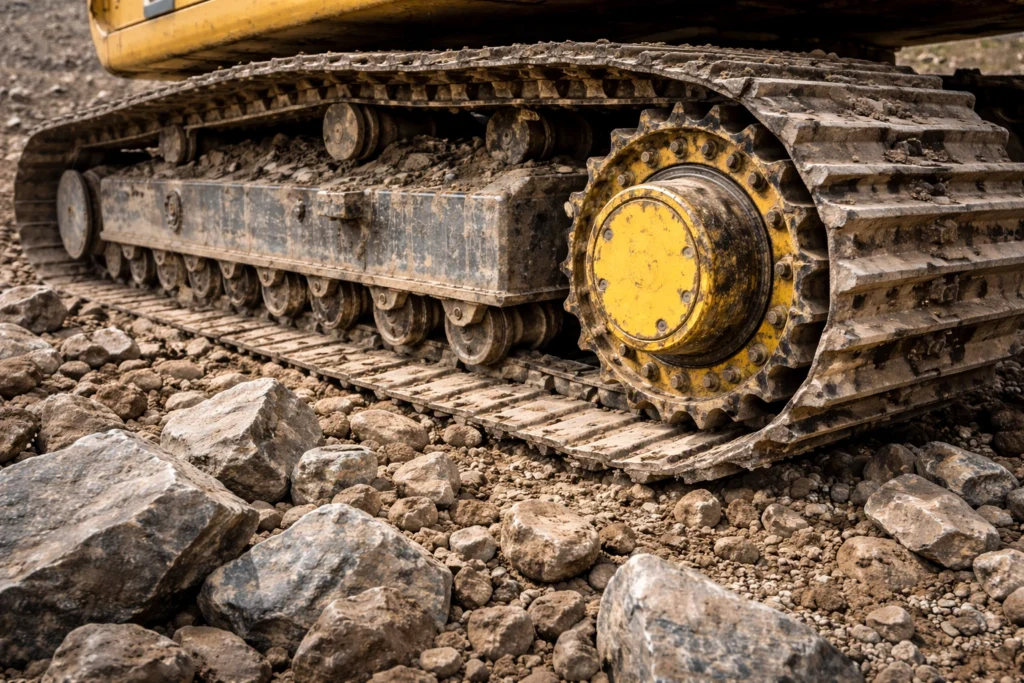
Along with that, overloading your excavator beyond rated capacity strains rollers, bushings, and the entire track system. When you operate beyond rated limits, every component takes extra stress.
Undercarriage Maintenance: Parts That Wear Out Fastest
Most operators don’t realize this, but catching undercarriage parts problems at 500 hours can mean a $300 roller replacement instead of rebuilding the whole system for $20,000. After 30 years of supplying New York contractors, we’ve seen that some parts wear out again and again.
Below are what wear out first and why it happens.
Track Rollers and Bottom Rollers: Your First Wear Points
Bottom rollers contact the ground constantly and show wear through flat spots, cracks, or wobbly movement patterns.
Meanwhile, mini excavators running on compact track loaders wear out rollers even faster because the tighter turning radius puts more pressure on them. The smaller the machine, the more stress each roller handles during turns.
Similarly, seized rollers create drag that burns more fuel and generate uneven pressure on adjacent undercarriage components. This increases operating costs and leads to increased wear across the entire system.
Sprockets and Idlers: When Metal Meets Metal
You’d be surprised how often sprocket teeth wear down from constant chain contact, especially when operators skip proper track tension adjustments regularly. The track chain grinds against worn teeth, making the problem worse.
Over time, front and rear idlers develop grooves or flat spots. This can cause track misalignment and premature wear on the bushings. When idlers lose their round shape, the entire track system suffers.
Worn sprockets make bushings, pins, and links all deteriorate faster because the teeth can’t grip properly anymore. Once sprocket teeth get sharp or pointed, you’re looking at a chain reaction of component failure.
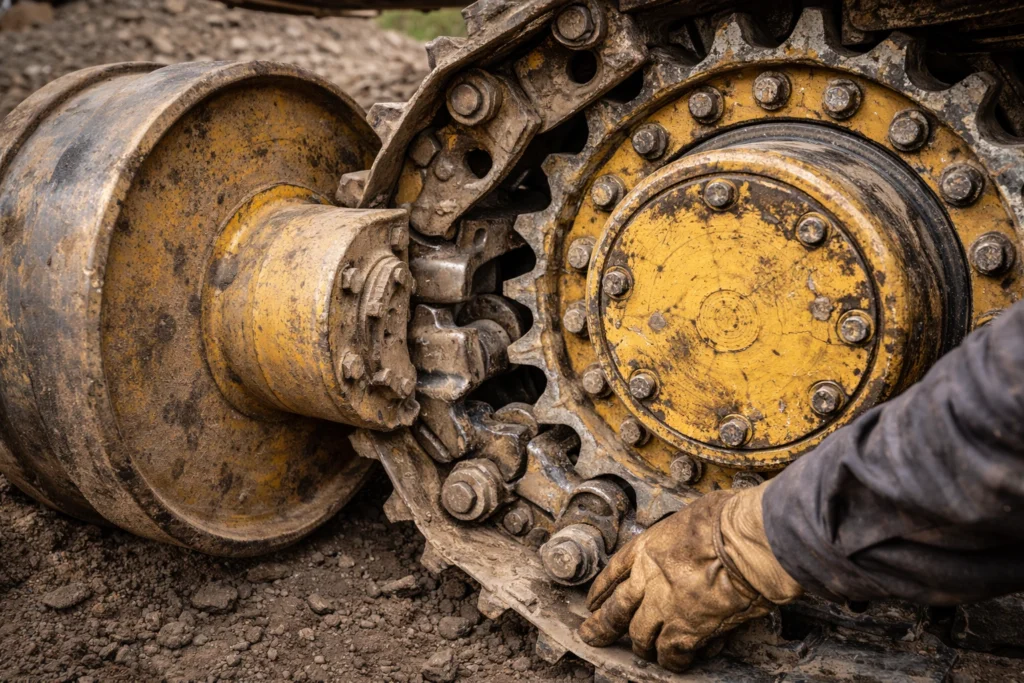
Track Chains and Shoes: The Foundation That Carries Everything
Track shoes lose their grousers over prolonged use and become smooth. It reduces traction on slopes and muddy work sites significantly. Without those grousers, your machine can’t grip terrain properly.
Beyond that, chain links stretch over time from repeated stress and wear, and once pitch changes too much, they need complete replacement parts. There’s no fixing stretched chain links.
Spotting Early Wear Before It Costs You Downtime
Early detection saves thousands in costly repairs. And most of the signs are visible during a quick walk-around inspection. You just need to know what to look for.
These are the signs you need to look for:
Visual Signs of Damage on Compact Track Loaders
Look for oil leaks around track adjusters, cracked rubber on shoes, and shiny flat spots on rollers. These are the first visual clues that components are failing. Apart from that, uneven wear on one side means misalignment issues that need immediate attention. When you inspect the tracks, both sides should show similar wear patterns.
Loose bolts, missing grousers, or visible cracks in chain links also signal it’s time for closer inspection and repair (we’ve seen this happen too many times to count). Don’t ignore these signs because they lead to performance issues fast.
Along with these, listen for unusual squeaking, grinding, or clicking noises that weren’t present during normal operation last week. This type of sound changes mean the metal is wearing incorrectly, or bearings are going bad, which causes further damage.
Proper Track Tension: Too Loose or Too Tight?
Track tension being too loose allows the track to derail during turns, while too tight overworks bearings and wears out rollers faster. So operators need to find the sweet spot between these extremes.
You can check tension by measuring the sag between the bottom rollers. Most excavators need 1-2 inches of clearance for peak performance. This simple measurement gets the job done and prevents expensive repairs.
Pro Tip: Adjust tension based on ground conditions since soft dirt needs slightly looser tracks than hard pavement does. The terrain you’re working on changes what optimal performance looks like for your machine.
Daily Habits That Prevent Expensive Replacement Parts
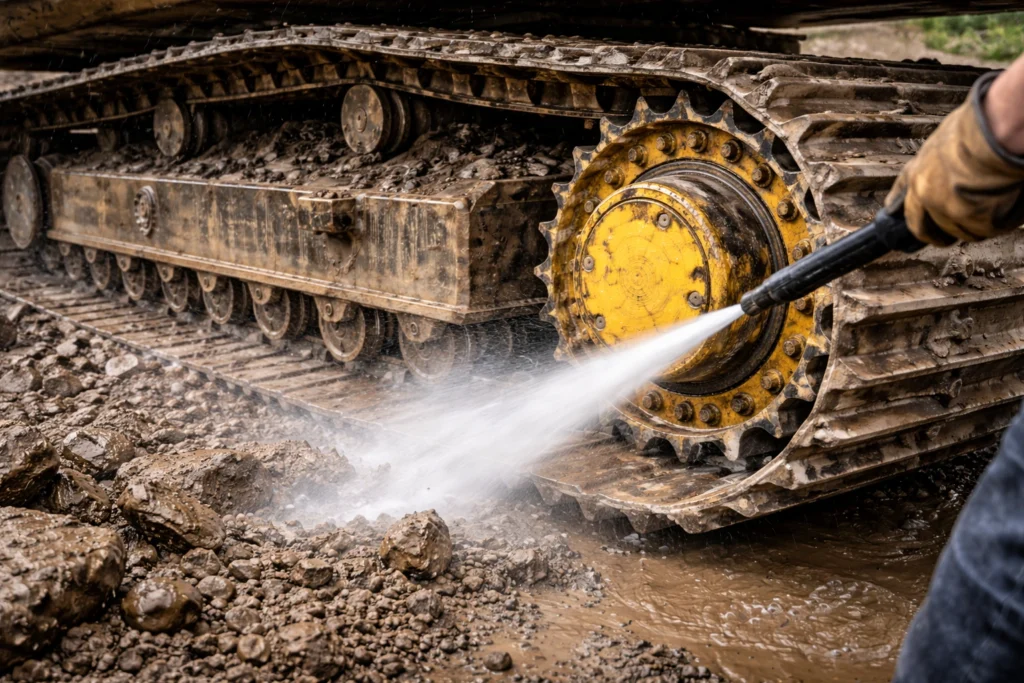
One thing we see constantly: operators who skip daily cleaning end up replacing undercarriage parts years earlier than necessary. Whereas, simple habits extend service life without taking much time.
The best way to minimize damage is to pressure wash the equipment’s undercarriage after each shift. This removes packed mud, rocks, and debris before it hardens overnight. Furthermore, frozen debris in winter seizes up rollers and bends components that cost far more than ten minutes of cleaning.
In fact, research from the US Department of Energy shows that predictive maintenance programs can increase the lifespan of undercarriage parts by 20-30%. And when you keep the undercarriage clean, daily inspections show you what’s happening with rollers, grease points, and other components that need regular maintenance.
Keep Your Equipment Running Without Surprise Repair Bills
Undercarriage maintenance saves the most money of any routine task you can do on excavators or compact track loaders. End-of-day cleaning takes only 10 minutes but extends the equipment’s undercarriage life by several thousand hours by preventing mud from hardening overnight.
When you need replacement parts, quality is just as important as price for heavy equipment that works hard every day. Bites Off Broadway has supplied undercarriage parts to construction industry contractors across New York for over 30 years. We stock the parts you need to get back to work fast without compromising on quality. Visit our website for more details.