
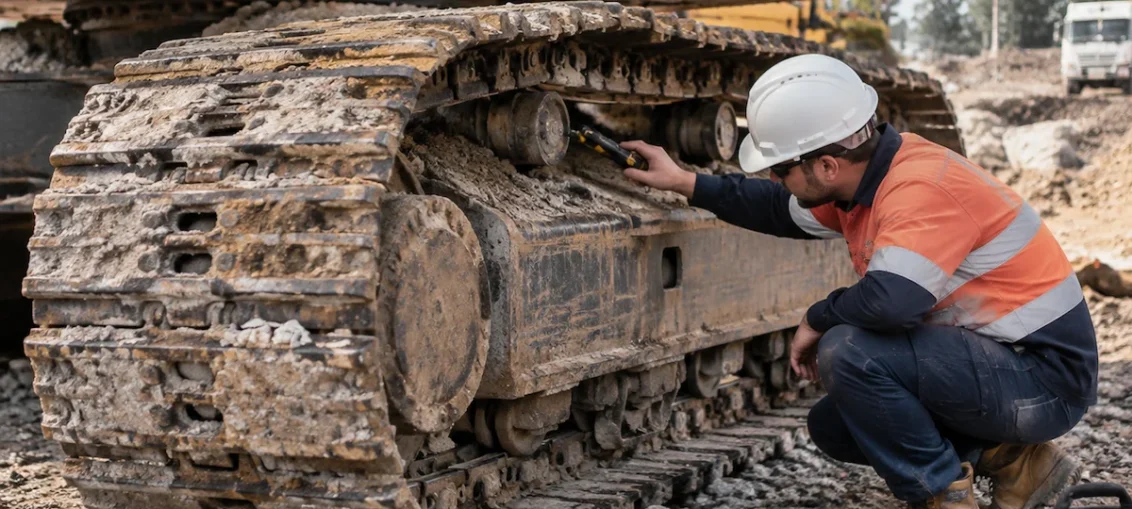
Excavator tracks usually wear gradually as the machine gets older. But uneven wear can also come from turning habits, ground conditions, incorrect track tension, or worn undercarriage parts.
We’ll break down the most common wear patterns, what they can indicate, and what can make them worse. By the end, you’ll know what to look for before uneven wear leads to a bigger undercarriage repair.
Signs of Uneven Excavator Track Wear
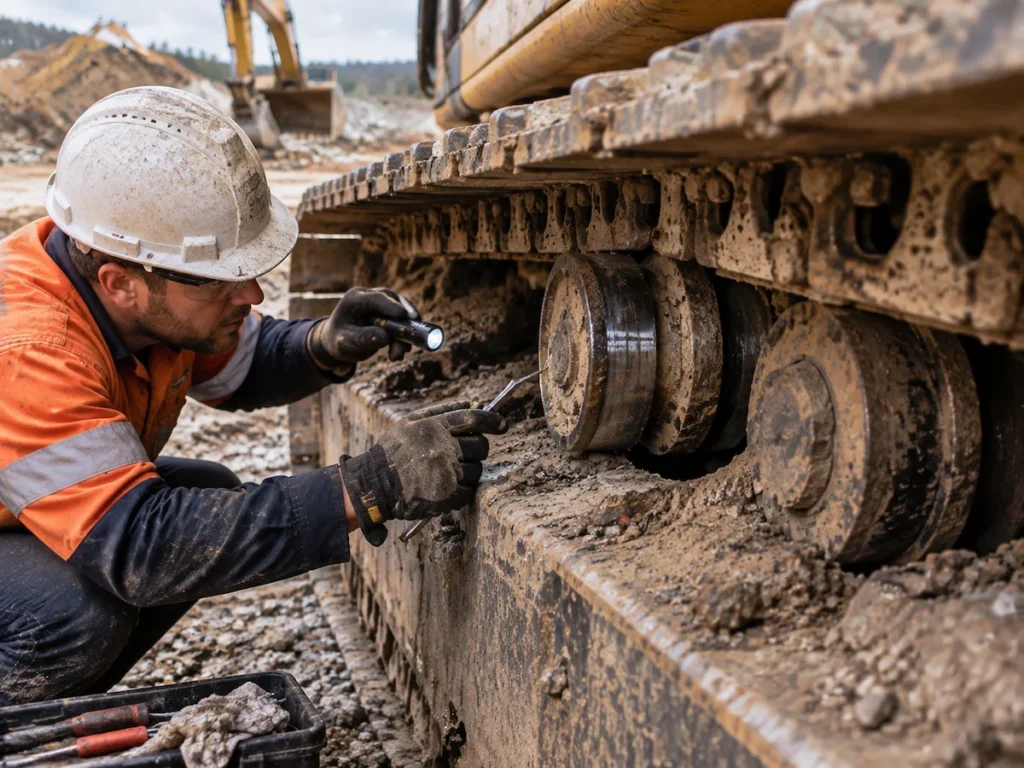
Uneven track wear can show up as faster wear on one side, damaged rollers, or a machine that pulls to one side. Let’s break them down in detail.
Uneven Track Chain Wear
Uneven track chain wear is easiest to spot when one side has stretched more than the other. If one chain has worn more than the other, you’ll notice the difference when you compare them side by side. A tape measure can help you confirm it.
Start by measuring the length of the same number of track links on each side. Take each measurement from the same point on the chain, then compare the results. If one measurement is longer, that chain has stretched more and is wearing faster.
Why does this happen? Well, repeated turns in one direction make the outer track travel farther during each turn. Working from the same position can also put more load on one side of the undercarriage.
Flat Spots and Damage on Rollers
Rollers should turn smoothly without roughness or resistance. If you find a flat spot, the roller may not be rotating properly and could be skidding against the track.
When a roller stops turning, it skids instead of rolling. That constant friction can wear a flat section into the roller quickly, especially when the excavator is working under load. Oil around the seal can also point to a damaged bearing.
Check for cracks, deep grooves, loose parts, or a roller that sits out of line. These problems can affect how the track runs and contribute to faster wear if you keep operating the excavator.
Tracks That Pull or Wander
You’re tracking across a jobsite when the excavator starts drifting to one side. You correct the controls, but it keeps pulling. Normally, you’d blame the controls. But if the machine keeps pulling in the same direction, the undercarriage could be the problem. To confirm, take a look at both tracks and compare them for uneven tension, worn rollers, or other visible damage.
Could one side of the undercarriage be more worn or out of alignment than the other? If so, that uneven wear could explain why the excavator keeps pulling in that direction.
Causes of Uneven Excavator Track Wear
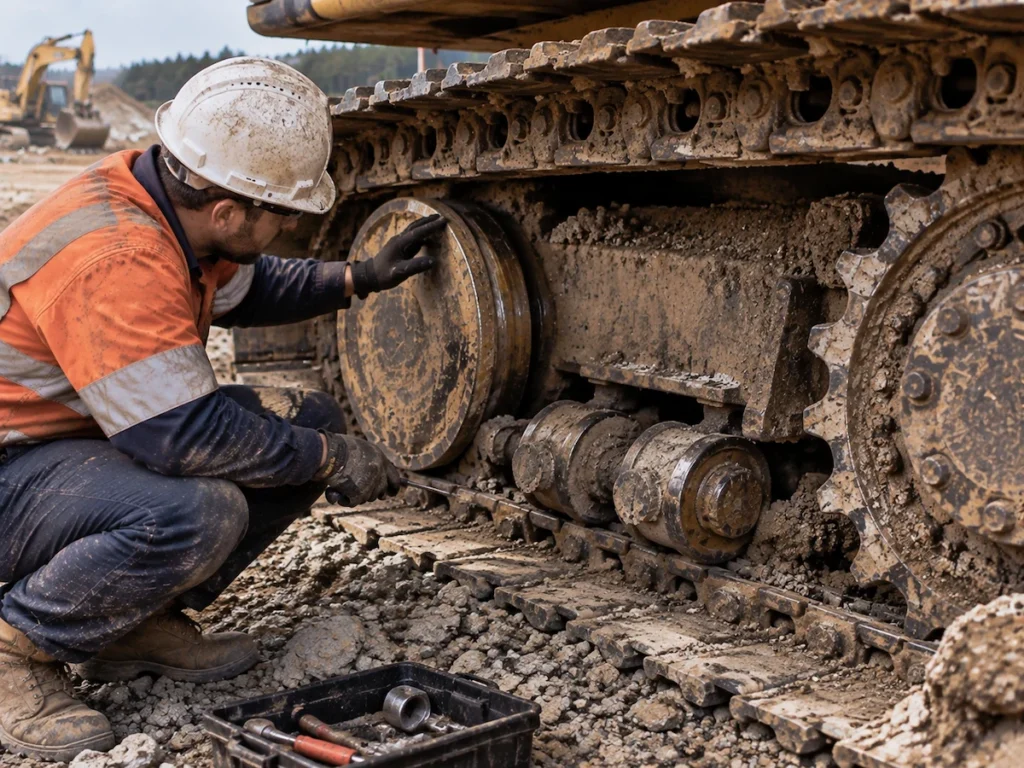
There are several reasons why one side of an excavator track can wear faster than the other. It could come down to how you operate the machine, the ground it works on, or a worn part in the undercarriage. Here are the most common causes:
- Repeated Turning in One Direction: Turning is part of every excavator’s job. But if you’re making the same sharp turns for hours, especially in one direction, you’re putting repeated stress on the same side of the undercarriage. That’s why you should alternate your turning direction when the job allows, so you don’t keep loading the same side.
- Uneven or Abrasive Ground: Rocky, muddy, or uneven ground won’t wear out your excavator tracks overnight. The problem is repeated exposure. As the machine works across these surfaces, the undercarriage deals with more friction, impact, and resistance. If one side takes more of that punishment than the other, it can start wearing faster.
- Incorrect Track Tension: A track that’s too loose or too tight can increase friction and put extra stress on the chain and other undercarriage parts. Either way, the track won’t move as it should, which can accelerate wear across the system.
- Poor Alignment: If the track isn’t running straight through the undercarriage, some components can take more load than others. You may notice the problem as uneven wear on the track or components on one side.
- Worn or Damaged Components: A worn roller, idler, or sprocket can change how the track runs and cause other parts to wear unevenly. What starts as one worn component can gradually spread the wear to the rest of the undercarriage.
From our experience, repeated turning in one direction and incorrect track tension are two of the first things worth checking when wear starts to look uneven.
Preventing Uneven Wear With Proper Track Tension and Inspection
You don’t need a major repair to start preventing uneven track wear. A few routine checks and better operating habits can help you catch problems before one side of the undercarriage starts wearing faster.
Start with track tension. A track that’s too loose can move around more than it should, while one that’s too tight puts extra pressure on the undercarriage. So, it’s always recommended to check the tension regularly and adjust it according to the manufacturer’s specifications.
Then inspect the undercarriage as part of your routine checks.** Look for damaged rollers, worn sprockets, loose components, or mud and rocks packed around the tracks. It’s worth taking those checks seriously when the undercarriage can account for around 50% of a track machine’s maintenance costs.
When Uneven Wear Calls for Component Replacement
Even if you do everything right, excavator components will eventually wear out. That’s part of running a working machine. The important thing is knowing when normal wear has become serious enough to require a replacement.
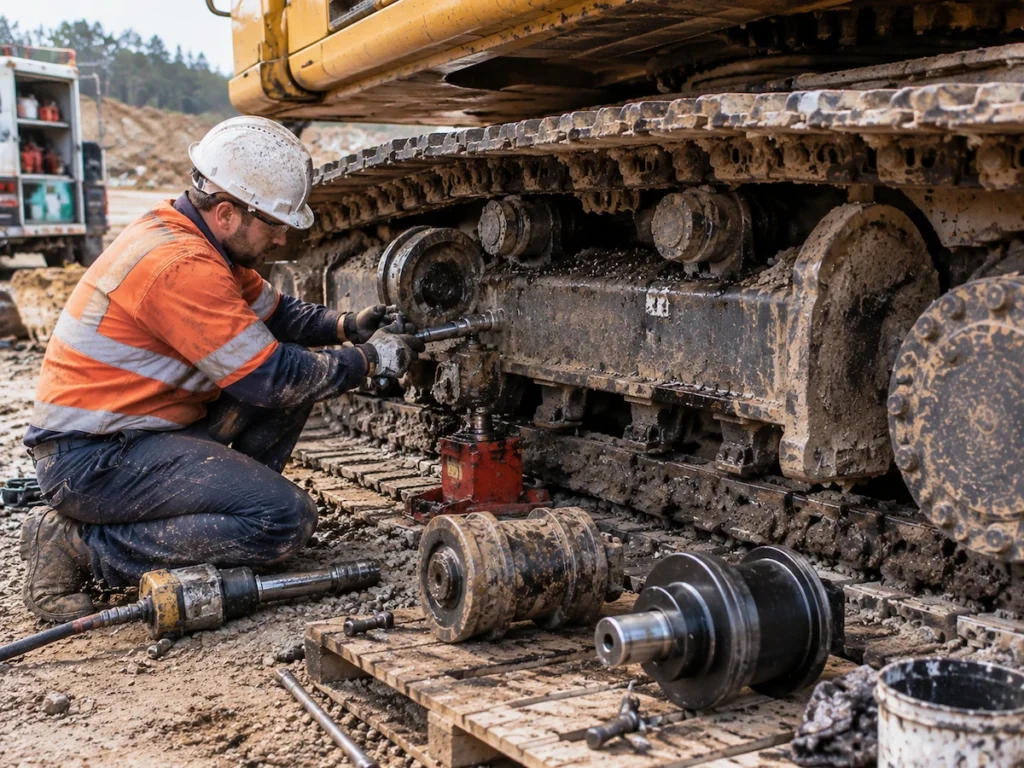
For example, if a roller has a severe flat spot, a damaged bearing, or a cracked housing, replacing it may be safer than continuing to run the excavator. The same applies to track chains, idlers, and sprockets with excessive wear or visible damage. At that point, have the undercarriage inspected by a qualified technician so you can address the problem before further wear affects other components.
Keep Your Undercarriage Wear in Check Before It Gets Expensive
By now, you should have a clearer idea of what uneven excavator track wear looks like, what can cause it, and how to prevent it from getting worse. If you notice unusual wear or damage, it’s better to have it checked early than wait until it affects other undercarriage components.
For questions about your excavator tracks or help deciding what to do next, feel free to contact the Bites Off Broadway team. We’d be happy to help you keep your equipment working reliably and avoid unnecessary undercarriage repairs.