
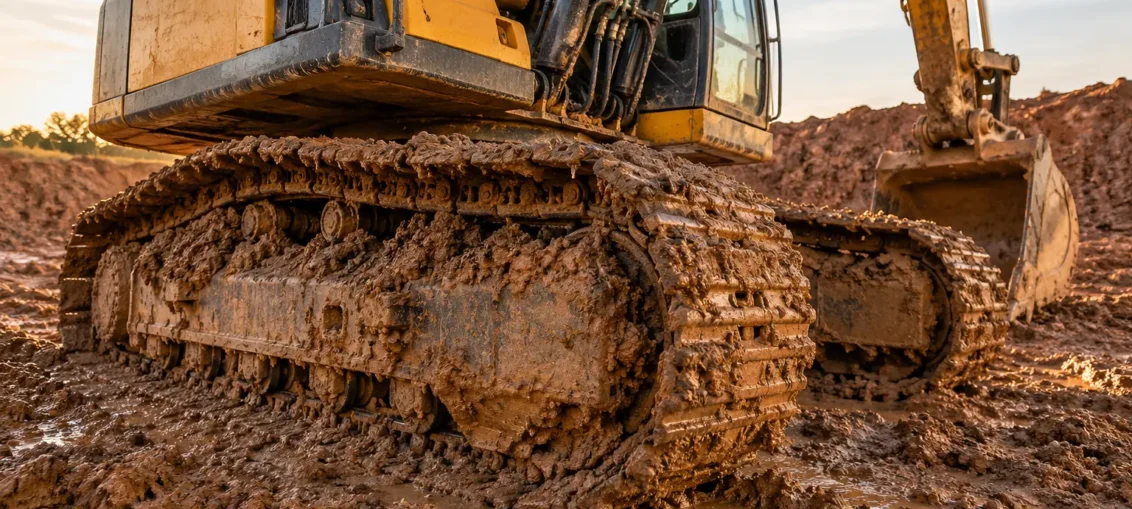
Mud looks harmless while it’s still wet on your excavator tracks. Give it a few hours after shutdown, though, and it hardens into a concrete-like shell that grinds against metal and traps moisture underneath. That’s when corrosion starts eating into your undercarriage components, sometimes before the next shift even begins.
Over 30 years of working with contractors across New York taught us that skipped cleanings are behind most premature undercarriage wear. A 20-minute routine after the job will save you weeks of downtime and thousands in parts.
Below, we’ll cover how packed dirt and debris damage your rollers, idlers, and sprockets and how it puts safety at risk. We’ll also break down the best way to handle excavator undercarriage maintenance on muddy worksites.
Why Dirt Buildup Gets Worse Once the Engine Shuts Off
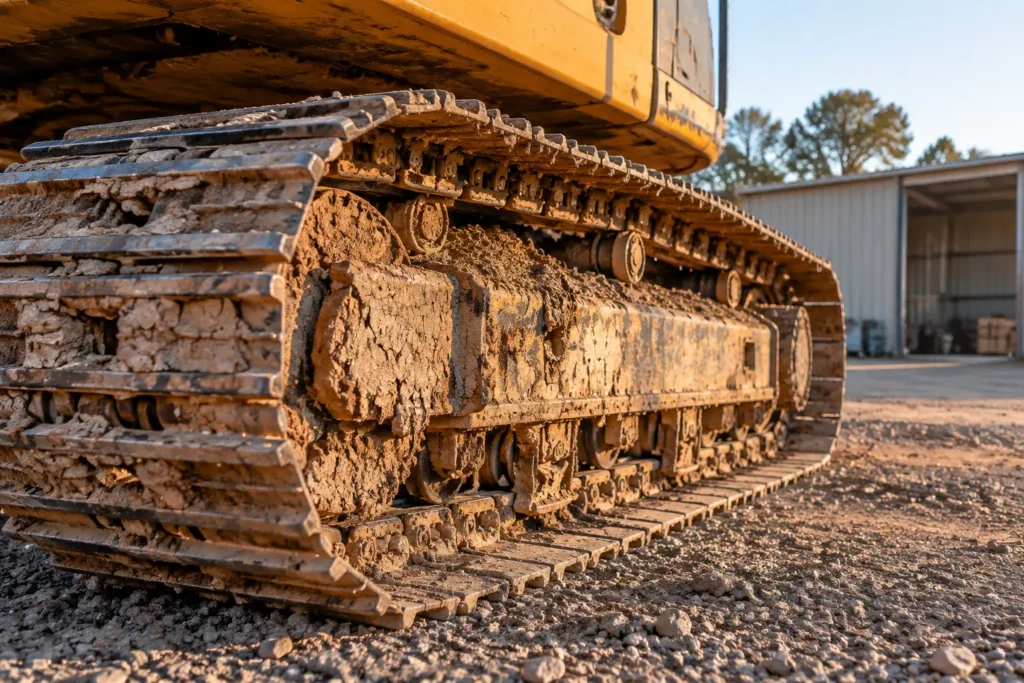
Believe it or not, mud starts bonding to your undercarriage within just three to four hours after you park the machine. Wet soil packed around your tracks and rollers dries out and locks onto every joint, pin, and bushing it touches.
Once that shell forms, it traps moisture underneath and creates the perfect conditions for rust and corrosion on exposed metal (even brand-new bushings aren’t immune to this).
On top of that, dried debris adds pounds of extra weight across your track links. That extra load increases ground pressure and puts strain on seals and sprockets every time you start the excavator for the next job. In colder months, any water still sitting in those gaps can freeze and crack components that looked fine the day before.
If you’ve ever tried scraping off mud that sat on equipment for even a few hours, you know how different it is from a same-day wash. Wet dirt slides right off. But dried mud needs a shovel.
What Packed Mud Does to Rollers, Idlers, and Sprockets
Catching component damage early can save you thousands on undercarriage rebuilds. The problem is, caked mud makes it nearly impossible to spot worn-out parts until a seal blows or a roller seizes.
Here’s what happens to each part when debris stays put.
Rollers and Idlers
Dried mud forces rollers and idlers out of alignment by wedging between the housing and the track frame. The friction alone wears down seals and burns through grease faster than a standard duty cycle would.
Once those seals go, dirt and water get inside the bearings, and you’re looking at a full replacement instead of a simple cleaning.
Sprockets
Caked soil between sprocket teeth causes the chain to skip over track links and create uneven contact patterns across the drive system. Over time, packed mud can tighten tracks beyond their recommended tension, and that speeds up wear on pins and bushings you can’t even see.
We’ve been around excavator undercarriages for over 30 years in New York, and nine times out of ten, a machine running rough traces back to sprockets nobody cleaned.
Now, let’s talk about what this means for the person sitting in the cab.
How Packed Mud Puts Operator Safety at Risk
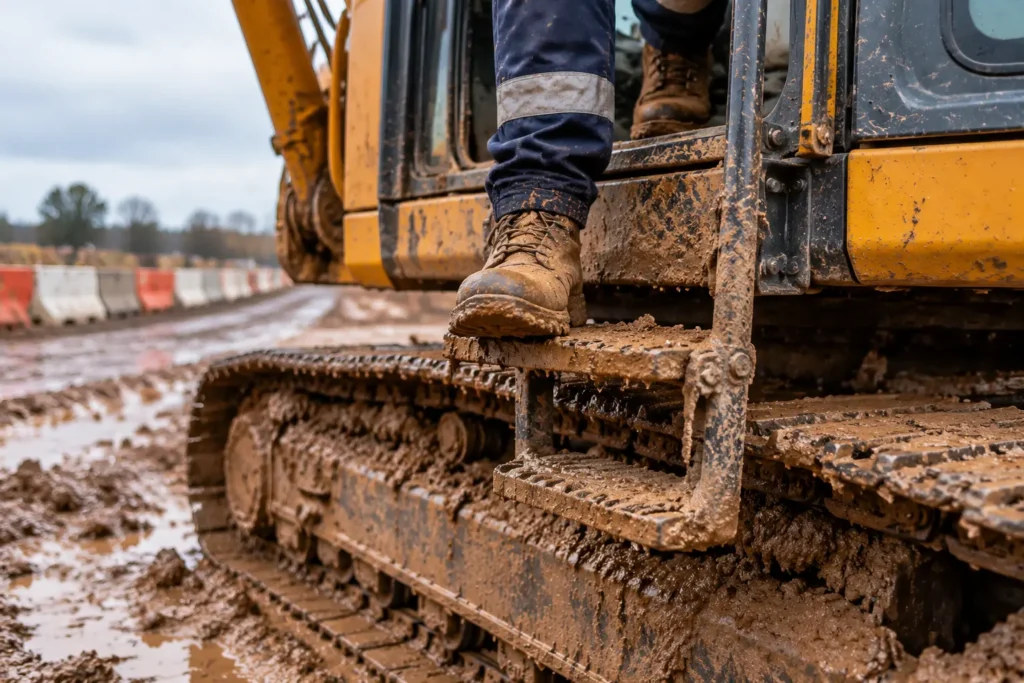
When was the last time you could see every pin, seal, and hose during your walkaround? Dried mud hides cracks, bent pins, and worn-out seals that you’d normally catch in a routine inspection. If any of those go unnoticed, you’re running equipment with damage you can’t see, and nobody wants to find out the hard way.
And that’s before you even get to the hydraulic lines. Packed debris around hydraulic hoses traps heat and masks oil leaks until a line gives out under pressure (not a cheap fix, either). A blown hose can spray hot fluid across the undercarriage, the cab, or anyone standing nearby.
We’ve had machines come into our shop around Sunnyside and Long Island City caked in mud so thick you couldn’t see the track links. All that buildup restricted movement so badly that the excavator barely responded on slopes. So, when your tracks can’t adjust to uneven ground, you lose control of the machine on the jobsite.
Once you know what to look for, cleaning up after a muddy job doesn’t take long.
The Best Way to Clean Your Undercarriage After a Muddy Job
The best time to clean your undercarriage is right after the job, while the mud is still wet. Honestly, the whole routine takes maybe 20 minutes. Most contractors we’ve worked with across the five boroughs follow this same process. These steps work the same on an excavator, skid steer, or any machine you run on tracks.
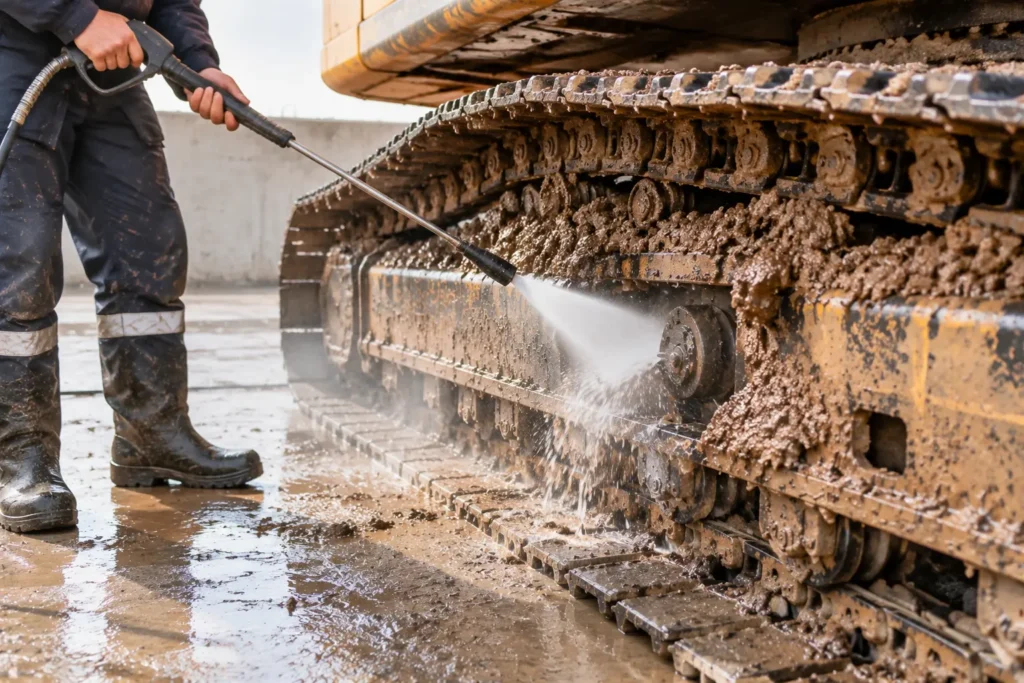
- Start With a Wash: Hit the undercarriage with a pressure washer while the soil is loose and damp, working from the center outward. That first wash removes most of the material before it has a chance to dry and bond. A garden hose works fine if there’s no washer on site.
- Scrape Thick Spots: Use a flat shovel or scraping tool to clear packed material from the undercarriage around sprockets and roller guards. You’d be surprised how much debris and small rocks pack into the gaps between track links, especially after a wet dig.
- Inspect After Cleaning: Walk around the machine and check track tension, pin condition, and seal integrity. This is when you’ll spot grease leaks, cracked housings, or wear that the mud was covering. Catching those early keeps your costs down and your equipment on schedule.
Do this after every muddy job, and you won’t have to guess what’s going on under your machine when the next project starts.
From there, it’s about avoiding a few habits that undo all that work.
Excavator Undercarriage Cleaning Mistakes That Cause More Damage
Look, nobody teaches you the right way to clean an undercarriage on day one. Most operators pick up habits early and never question them, even when they’re doing real damage.
These are the three we see the most:
- Blasting Seals Directly: Aim a high-pressure washer directly at your seals, and you’ll force water into components that need to stay dry. That trapped water corrodes bearings from the inside, and replacements aren’t cheap.
- Skipping the Inspection: If you wash everything off and walk away, you miss the wear and leaks the mud was sitting on. A quick walkaround takes two minutes and can save you an expensive undercarriage maintenance call.
- Waiting Too Long: Mud that sits on your excavator overnight hardens against the metal into a layer that a rust inhibitor can’t protect. At that point, you’re chipping, not cleaning, and that risks gouging surfaces and stripping paint.
Remember, none of these take extra time. All you need is a little awareness the next time you hose down your machine.
Keeping Excavator Maintenance Simple on Muddy Worksites
Mud is part of every jobsite. What you can control is how you handle it once the work is done. A same-day cleaning routine and a quick inspection go a long way toward protecting your undercarriage. And it all starts with one tip: clean before you call it a day.
For more guides on keeping your excavator and undercarriage in top shape, visit Bites Off Broadway.
Frequently Asked Questions
Before we wrap up, here are a few questions we hear regularly from operators working on muddy sites across New York.
How often should you perform excavator undercarriage cleaning?
Generally, you should clean your undercarriage after every job on muddy or wet ground. If you’re working in rain or soft soil for several hours, don’t wait until the end of the week. A same-day washdown takes 20 minutes and prevents most of the buildup that causes long-term damage.
Should you clean the undercarriage before storing your excavator?
Always. Mud left on a machine in storage dries out completely and becomes nearly impossible to remove.
Clearing debris from your tracks, buckets, and attachments before you park the excavator for any rest period keeps corrosion from setting in while the machine sits idle.
Can dust and dry soil cause the same damage as mud?
Dust and dry soil don’t trap moisture the same way wet mud does, but they still wear down components over time. Fine dust works its way into seals and mixes with oil and grease to form an abrasive paste. In dry conditions, air-blowing the undercarriage with compressed air before washing is one of the better methods for loosening that buildup.
Do undercarriage cleaning tips apply to mini excavators and skid steers too?
The same tips apply to any tracked machine. Mini excavators, skid steers, and compact track loaders all deal with the same mud and debris issues around their rollers, idlers, and sprockets.
The only difference is access. Smaller machines sit lower to the ground, so you may need to raise them on blocks or use a ramp to reach the undercarriage properly.