
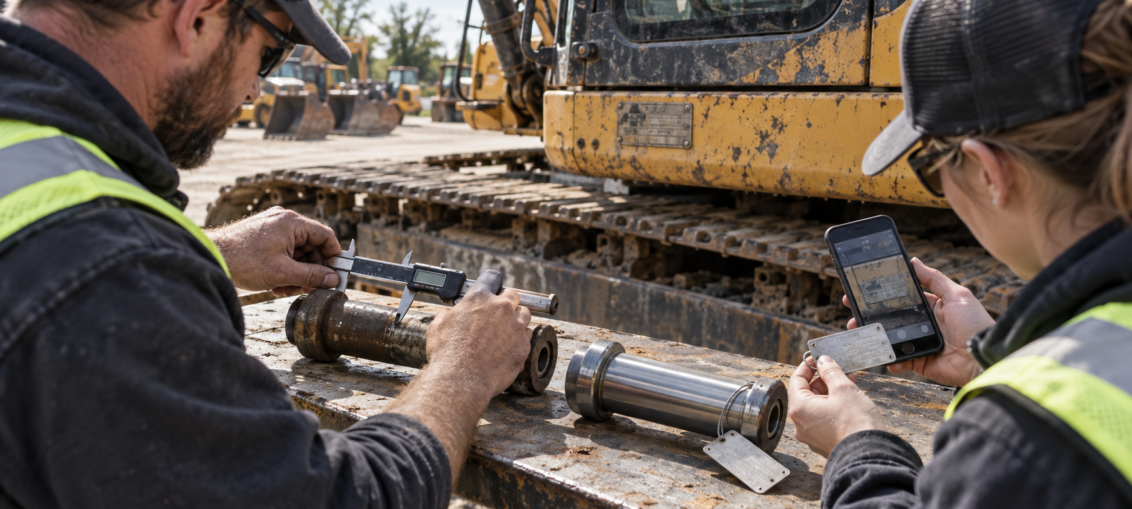
Knowing your excavator part numbers before you call a supplier is the fastest way to avoid a wrong order. Most buyers skip this step and rely on the model name instead. That habit is where most fitment mistakes start.
A part number alone only tells half the story. Excavator part numbers and serial numbers work together rather than as substitutes. A part number identifies the component, while a serial number confirms which exact machine that component needs to match.
This guide covers what determines fitment: part numbers, serial numbers, physical measurements, photos, and the right questions to ask a supplier.
A Model Name Alone Doesn’t Confirm the Right Excavator Part
A model name only tells you the general excavator line rather than the exact build that rolled off the factory floor. Different production batches under the same model can carry different mounting brackets, hydraulic fittings, or bolt patterns.
Manufacturers can create those differences by changing parts during production without changing the listed model name. One machine built early in a run and one built later can wear the same model designation and still need different replacement parts.
These build differences show up in a few specific spots on your excavator:
- Bolt Pattern Shifts: Mounting points on attachments can move between production batches, even within one model year. A bolt pattern that fit last year’s build might miss entirely on this year’s frame.
- Mid-Run Part Swaps: Manufacturers often switch suppliers or redesign a component partway through a production run. The change rarely comes with a new model designation, so nothing on the outside signals it happened.
- Regional Build Differences: Excavators sold in different regions sometimes use different hydraulic fittings or electrical components. A part number built for one market can fail in another, so confirm the region a part was made for before you order.
Each of these gaps leads to the same outcome: a part that doesn’t fit, a return shipment, and a delayed job. The excavator part number is what closes that gap, since it identifies the specific build rather than the general model line.
The Excavator Part Number That Separates a Match from a Guess
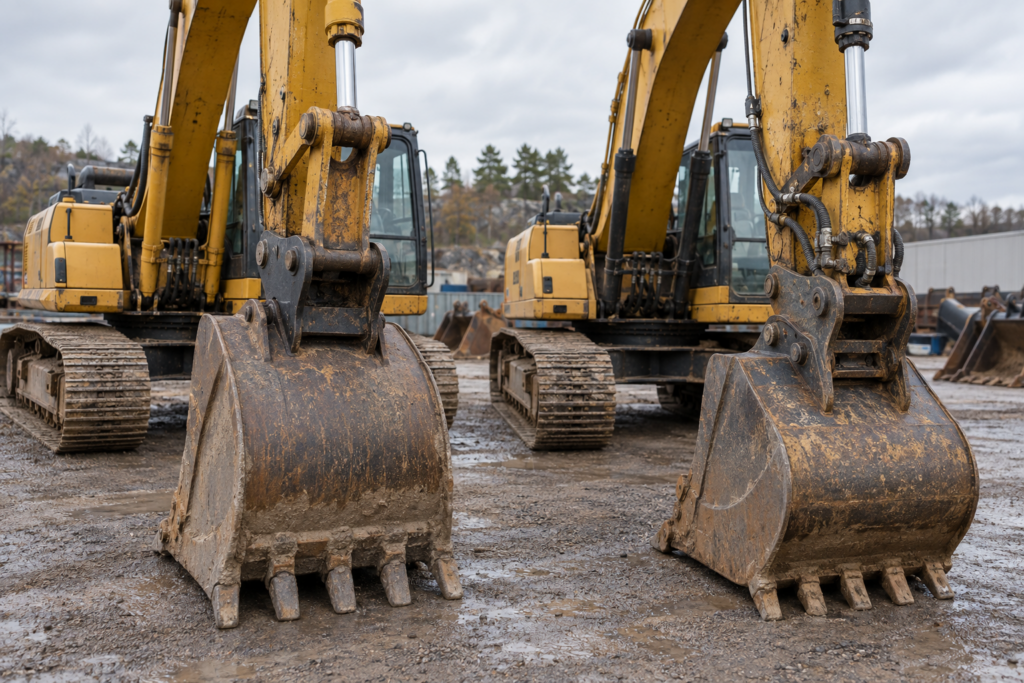
Two machines wearing the same badge can still need different parts, and a part number is what tells them apart. The excavator part number stamped somewhere on the machine is what separates one build from another.
The machine itself follows an international standard for identification numbering. That standard covers the whole machine rather than individual parts. A separate part number is what matters for ordering the right component.
Finding the Right Part Number on Mini Excavators and Major Makes
Mini excavators tend to hide their part number plate in a smaller spot, close to the base of the operator cabin, requiring a closer look than on larger machines. Once you spot it, a quick wipe down clears away the dirt and grease that often hides a stamped or riveted plate.
Major makes often place the plate somewhere else entirely, sometimes on the frame rather than near the cabin. Checking the owner’s manual first beats wandering around the machine guessing.
If the plate is damaged, illegible, or missing entirely, don’t guess at the number. Instead, use the machine’s serial number to look it up. Many manufacturers, including Caterpillar, Komatsu, and John Deere, can identify a part number this way. Availability can vary by dealer and machine age.
It’s the kind of thing our team at Bites Off Broadway gets asked about often. A worn or repainted plate can hide the stamp completely.
Many manufacturers, including Caterpillar, Komatsu, and John Deere, can look up a part number using the machine’s serial number instead, though availability can vary by dealer and machine age.
What Ordering Spare Parts Without a Part Number Costs You
Skipping the part number when ordering spare parts leads to two predictable outcomes.
- Wrong Shipment Costs: A mismatched part means return freight charges and a job that sits stalled until you replace it with the correct one. Rush replacements often cost more than the original order. That gap is exactly wha treducing repair costs depends on avoiding.
- False Confidence Risk: A part that fits today but was never confirmed by number may still fail early. Two parts can look nearly identical while using different metal grades, wall thickness, or tolerances built for a different machine’s load. A close visual match is not a verified one.
Both outcomes trace back to the same mistake: ordering on assumption instead of verification. A part number identifies the component correctly, but pairing it with the machine’s serial number establishes that component matches your specific build rather than just the general model.
Reading a Machine Serial Number Before You Order Replacement Parts
A full serial number can run ten or more digits. The final three to four digits typically identify the production sequence, the specific build that came off the line. That sequence can differ completely from what the model name suggests.
Reading that number correctly means ordering the right spare part on the first attempt. Serial number breaks catch even buyers who have ordered from the same brand for years. Manufacturers like Bites off Broadway use these breaks to mark changes made partway through production.
A serial number confirms three specific things:
| What It Confirms | What It Means for Your Order |
| Production batch | Ties your excavator to the exact batch it came from rather than just the general model line |
| Mid-production changes | Flags hydraulic, wiring, or hardware updates that never get announced publicly |
| Brand-specific format | Confirms how to read the number correctly, since Caterpillar, Komatsu, and other brands each format differently |
The serial number plate typically sits near the engine bay or on the main frame. If it’s not in either spot, the owner’s manual will point you to the exact location for your model.
With the part number and serial number both verified, the next thing to check is whether the part physically fits your machine.
The Measurements That Keep Ground Engaging Tools Running
Ground-engaging tools take constant impact and abrasion from digging into rock, dirt, or debris on any site. It’s a wear pattern we cover often on the Bites Off Broadway blog, since a loose fit shortens a part’s life fast.Getting the fit right starts with three specific measurements.
Which Dimensions Confirm the Right Fit for Your Excavator
Start with pin diameter and bushing length before ordering any attachment hardware. Pin tolerances vary by manufacturer, but even a small gap can keep a pin from seating correctly. A pin that doesn’t seat fully lets the attachment shift under load, wearing down the bushing faster than normal.
From there, check bucket width against your excavator’s frame width rather than just the attachment’s mounting bracket. A bucket that runs too wide or too narrow cuts into digging output immediately.
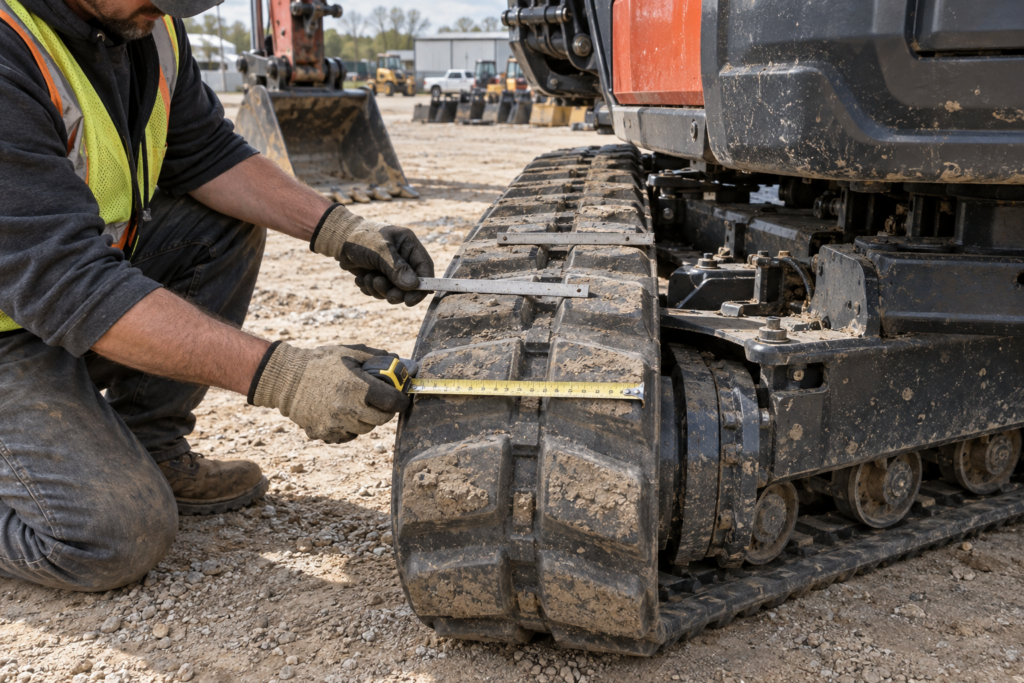
Lastly, confirm track width and link pitch, the spacing between links in the track chain. Because a size off by even one notch throws off tension across the whole track.
Side Note: Rock and mud take a different toll on rubber tracks than packed dirt does. For a closer look at how ground conditions affect wear, see our full breakdown.
When Photos Catch Errors, Numbers Alone Can Miss
Measurements confirm size, but they don’t show condition. Photos catch wear patterns and damage that a tape measure can’t show.
Send a supplier these two things along with your measurements:
- Wear Pattern Shots: Photograph the component from a few angles, including any visible rust or bending. These details show a supplier the machine’s condition, something a measurement alone can’t capture.
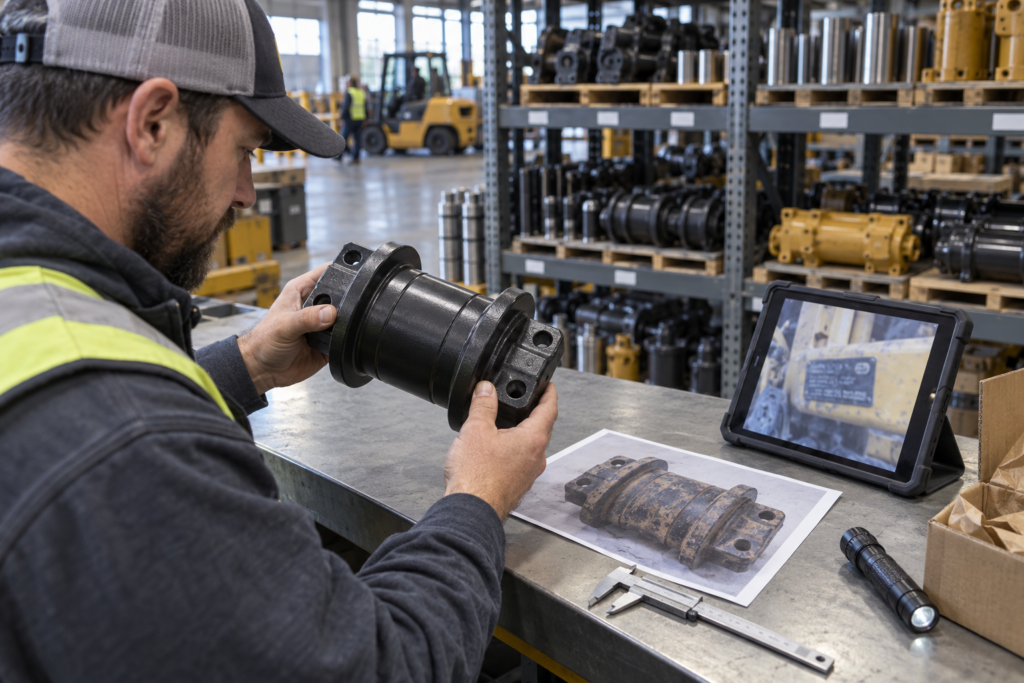
- Marking Close-Ups: Any stamped numbers or part markings still visible on the old component are worth a close-up shot. Casting codes and OEM stamps often confirm a match faster than a written description alone.
Numbers tell a supplier what component to pull. Photos confirm that the component matches what they have on hand.
What Should You Ask an Excavator Parts Supplier Before You Order?
The right supplier conversation happens before the invoice, ahead of any chance for a wrong part to arrive. A supplier who asks for your serial number range prior to quoting a price is checking the build. That’s different from just repeating the model name back to you.
Here are three specific questions to ask your excavator parts supplier:
- Part Number Verification: Ask whether the part number lines up with your serial number range rather than just the model. Hesitation on this question is a warning sign worth noting.
- Return Policy Terms: A return policy tells you more than a price quote ever will, so ask about it before you order. If the part doesn’t fit once it arrives, a clear policy means a fast fix instead of a fight.
- Stock Depth and Range: How many excavator brands does their stock actually cover? A supplier limited to one or two brands is less likely to have a backup on hand if your first option falls through.
These three questions take less time to ask than the single wrong shipment cost to fix. A supplier’s answers here tell you as much about the order ahead as the part number itself.
Choosing the Right Part from a Wide Selection Without Getting It Wrong
Every wrong excavator part order traces back to one of five gaps. That includes a missing part number, an unchecked serial number, an unmeasured dimension, or a missing photo. It can also mean a supplier who never got asked the right questions.
Each one is a five-minute check. None of them requires special tools beyond a tape measure and a phone camera. More options from a supplier only help once fitment is confirmed. A wide selection means nothing if none of it matches your machine.
Run through these checks before your next order. If a plate is damaged, a number won’t match, or you’re not sure what you’re looking at, the Bites Off Broadway team is easy to reach out to with questions.