
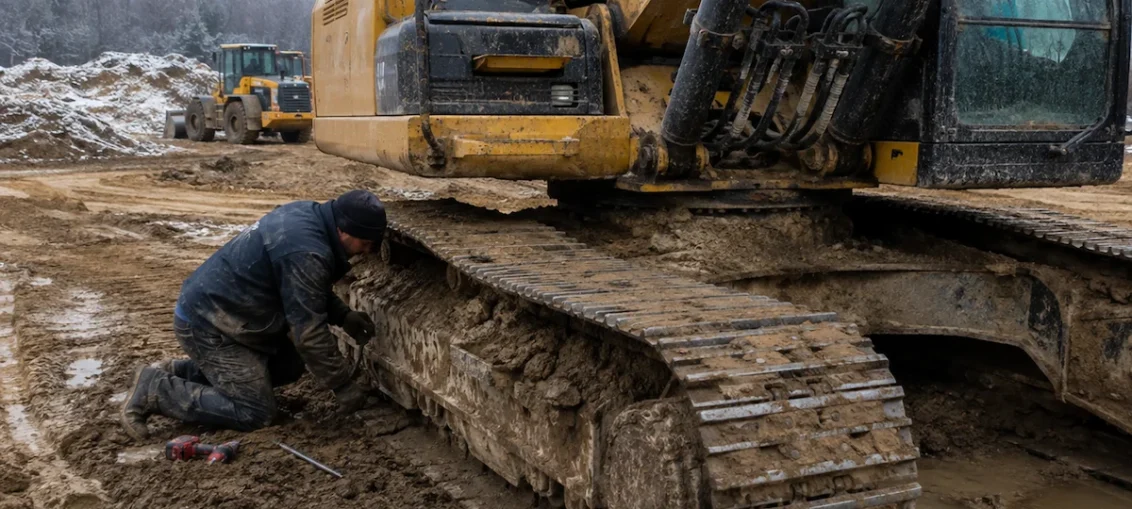
Weather conditions accelerate heavy equipment wear by increasing corrosion, straining hydraulic systems, and breaking down rubber components. Yet most crews only focus on operating hours and the loads their machines carry during inspections.
In practice, rain packs mud into joints while summer heat thins fluids and clogs filters. And cold mornings stiffen rubber tracks before the first bucket drops. Each season hits different components, so your inspection priorities should change with the weather.
In this article, you’ll learn:
- How each weather condition affects your heavy equipment
- Which components take the hardest hit
- What maintenance checks to run before it costs you thousands
Let’s get started.
Rain, Mud, and Rust: How Wet Conditions Break Down Construction Equipment
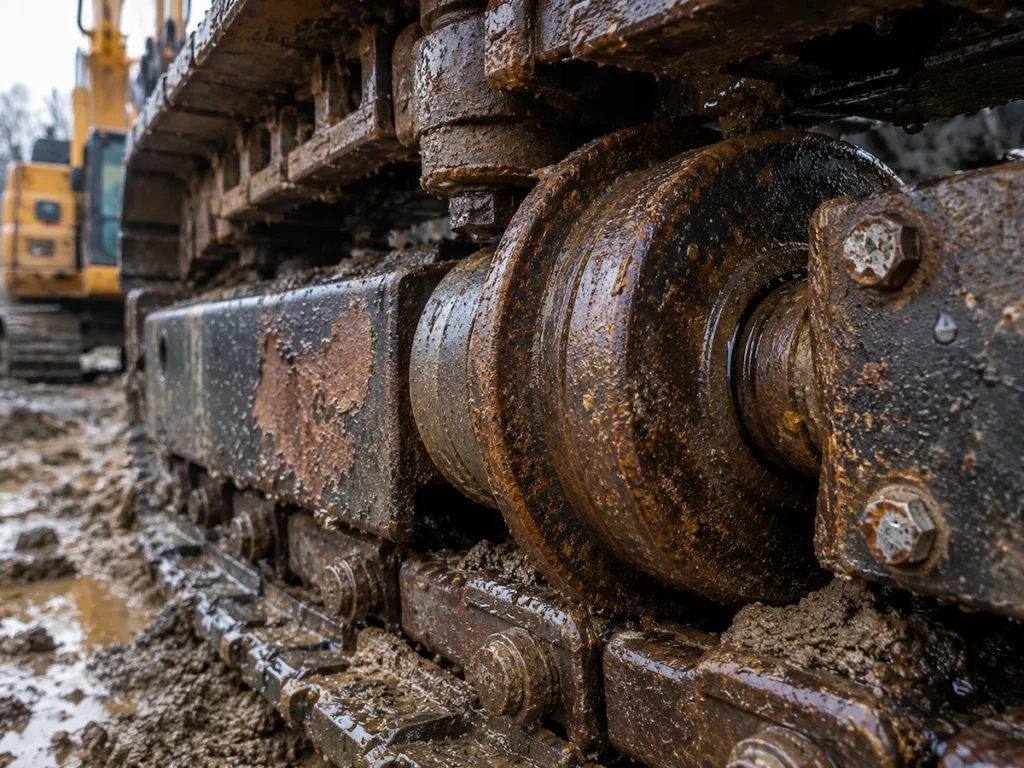
Wet conditions are one of the quickest ways to shorten the life of construction equipment. A few days of rain on a jobsite can cause damage in places you can’t easily see. And by the time you notice the damage, repair costs are already climbing.
Mud, moisture, and standing water each attack different parts of your machine. Of all the components they affect, two components take the worst of the hit.
Corrosion on Undercarriage Parts and What It Costs You
Rust on undercarriage parts often starts as minor surface corrosion but can become an expensive repair if you don’t check them regularly. For example, surface oxidation on a roller or idler can gradually spread to surrounding components and end up in a full replacement.
That oxidation risk increases more in high-humidity areas like Port Morris, where heavy rain leaves moisture on undercarriage components for longer. That’s why technicians should check for early signs of surface rust during every inspection, before corrosion reaches load-bearing parts.
Why Rubber Tracks Take the Worst Hit in Wet Weather
Generally, wet terrain increases lateral stress on rubber tracks with every directional shift. As traction decreases, the tracks experience more slip and friction, so the lugs wear more quickly.
Clay-heavy soils around jobsites like Jamaica and Sunset Park place even more strain on rubber tracks (clay soil is basically a rubber track’s worst enemy). This happens because wet clay sticks to the tracks, adds weight with every rotation, and increases abrasion as the machine moves.
Over time, that constant stress reduces the rubber’s flexibility and shortens the track’s service life.
Heat and Dust: The Silent Side of Heavy Equipment Maintenance
Most equipment maintenance problems that show up in summer started weeks earlier, in the heat. And by the time a hydraulic system flags an issue or an engine runs rough, the damage has already been building.
The following two components bear the most load when temperatures climb on a construction site.
How High Temperatures Accelerate Equipment Lifecycle Decline
Repeated heat cycles cause metal parts to expand and contract, gradually loosening fasteners and joints. If that continues throughout summer, components begin wearing unevenly. And that’s an equipment lifecycle management problem rather than just a maintenance issue.
High temperatures also reduce lubricant performance. Because of this, engine oil and hydraulic fluids break down more quickly in extreme heat, which can shorten service intervals. For example, oil that lasts 250 hours under normal conditions may need replacing after around 150 hours during peak summer operation.
To stay ahead of that wear, operators often check oil levels and fluid condition before the next scheduled service. On jobsites like Long Island City, hot July weather makes those extra checks worthwhile.
Dust and Debris Buildup in Filters and Moving Parts
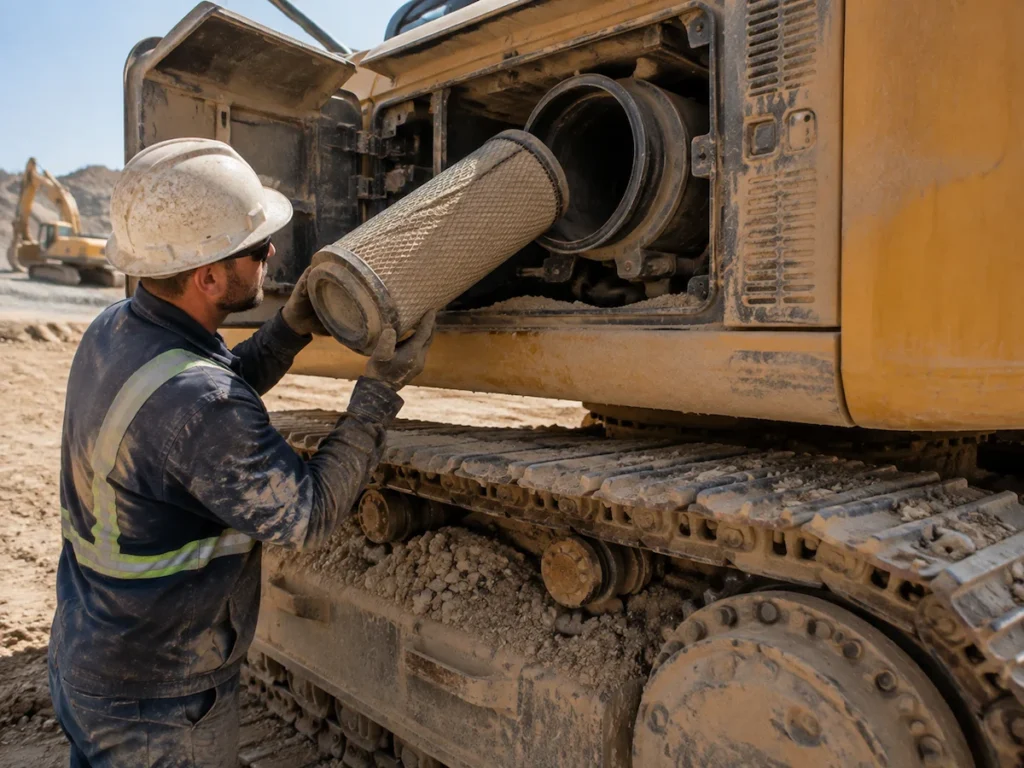
A clogged air filter forces the engine to work harder, burns more fuel, and pushes operating temperatures even higher. And in dusty environments, filters can reach their service limit in half the expected time on construction sites.
Beyond that, debris that collects in sprockets and idlers grinds against metal surfaces between maintenance visits. That abrasive wear shortens machinery life well before the scheduled replacement window.
Cold Weather and What It Does to Your Equipment Lifecycle
Freezing temperatures put hydraulic systems, rubber components, and metal joints under stress, which slows machine performance. And most crews assume this unusuality is just the cold. In reality, thicker hydraulic fluid, stiffer rubber, and reduced battery performance can all contribute to the problem.
Generally, hydraulic fluid thickens in cold weather. So if an operator starts the machine before the fluid warms to its normal operating temperature, it flows more slowly through the hydraulic system. As a result, pumps and seals take the most hit.
Over time, that repeated cold-start stress shortens the asset’s useful life more quickly than the hours on the meter would suggest.
Metal components also contract in freezing conditions by opening small gaps at joints where moisture collects and then freezes again. Gradually, each freeze-thaw cycle widens those gaps a little more.
As battery connections corrode faster in the cold, coolant systems work harder to regulate engine temperature. Why? Because torsion axles on rubber track equipment lose some of their flex and become more vulnerable to impact damage on frozen ground.
What’s more, rubber tracks and seals turn brittle when temperatures drop below freezing. Unlike metal wear, which is gradual, rubber can crack under a single hard load in cold conditions.
In that sense, the fix isn’t complicated. A proper cold-weather inspection ahead of the season protects the equipment lifecycle and keeps unplanned downtime off your schedule.
Preventive Maintenance Tips Across Every Season
Seasonal preventive maintenance includes small, consistent checks that fight the most expensive repairs later. It takes only a quick 10-minute walkaround to reveal loose fittings, early corrosion, fluid leaks, or track damage before they develop into costly repairs.
Here are the maintenance tips every operator and site manager should follow:
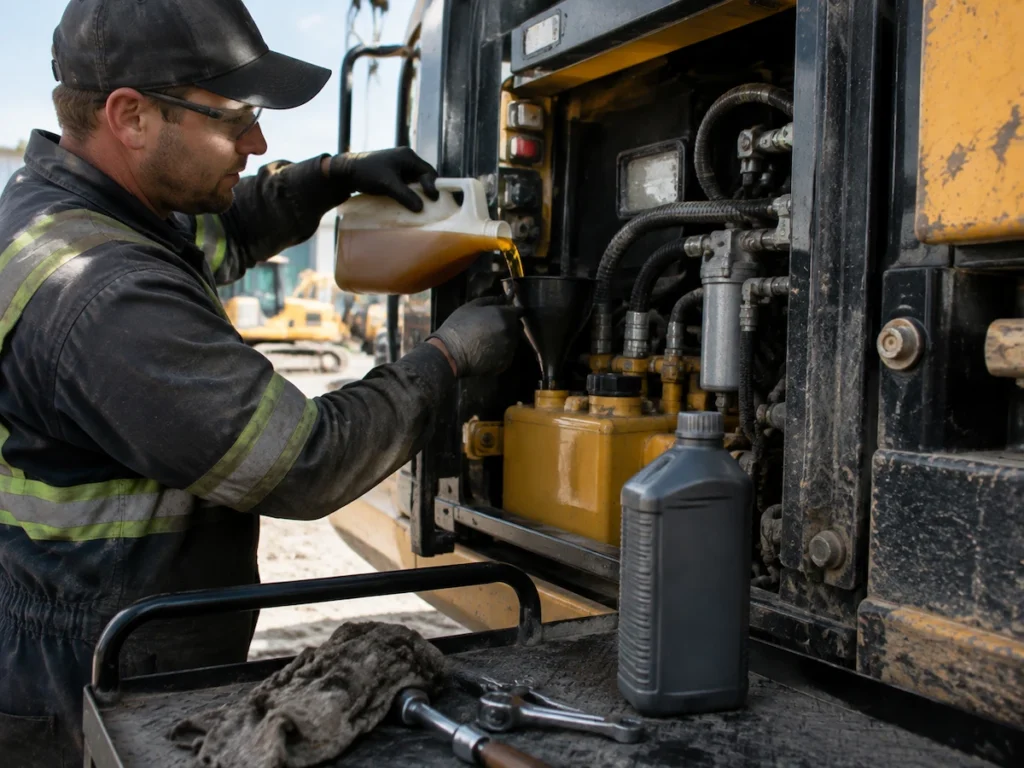
- Use the Right Fluids: Hydraulic fluid and engine oil viscosity requirements change between seasons. So you should use the exact specifications your manufacturer recommends to ensure proper lubrication in both summer heat and winter cold.
- Check the Undercarriage: In wet conditions, mud, debris, and moisture trapped on components between jobs is how corrosion starts. That’s why you must check rubber tracks for cracking, rollers for surface rust, and joints for packed debris. This quick inspection after wet or muddy operation can catch early wear and reduce the risk of equipment failure.
- Inspect Air Filters: Dusty summer job sites clog filters faster than the standard replacement interval accounts for. In this case, monitoring filter condition keeps fuel consumption down and construction equipment running at full potential.
- Check Winter Essentials: Corroded terminals and low coolant levels are two of the common causes of unplanned downtime when temperatures drop. That’s why you should check tire pressure, inspect torsion axles, and ensure coolant is at the correct level before the cold season hits.
In our experience supplying undercarriage parts across New York jobsites, the operators who follow these steps consistently get more lifespan from their assets.
That’s how proper maintenance protects your investment and extends the equipment lifecycle well beyond what irregular servicing allows.
Keep Your Equipment Running, Whatever the Forecast
Weather doesn’t pause for your project schedule, and neither does the wear on your machinery. Rain, heat, dust, and freezing temperatures each affect different components, and the signs of wear often appear only after performance starts to decline.
But the good news is that most of it is preventable. Regular inspection, seasonal fluid changes, and timely service intervals are what keep equipment running longer and reduce maintenance costs.
At Bites Off Broadway, we’ve been supplying construction equipment parts across New York for over 30 years. So if your undercarriage components, rubber tracks, or hydraulic parts need replacing, we help you find the right parts to keep your equipment working reliably.
Reach out to our team, and we’ll help you get the right parts before the next season hits.