
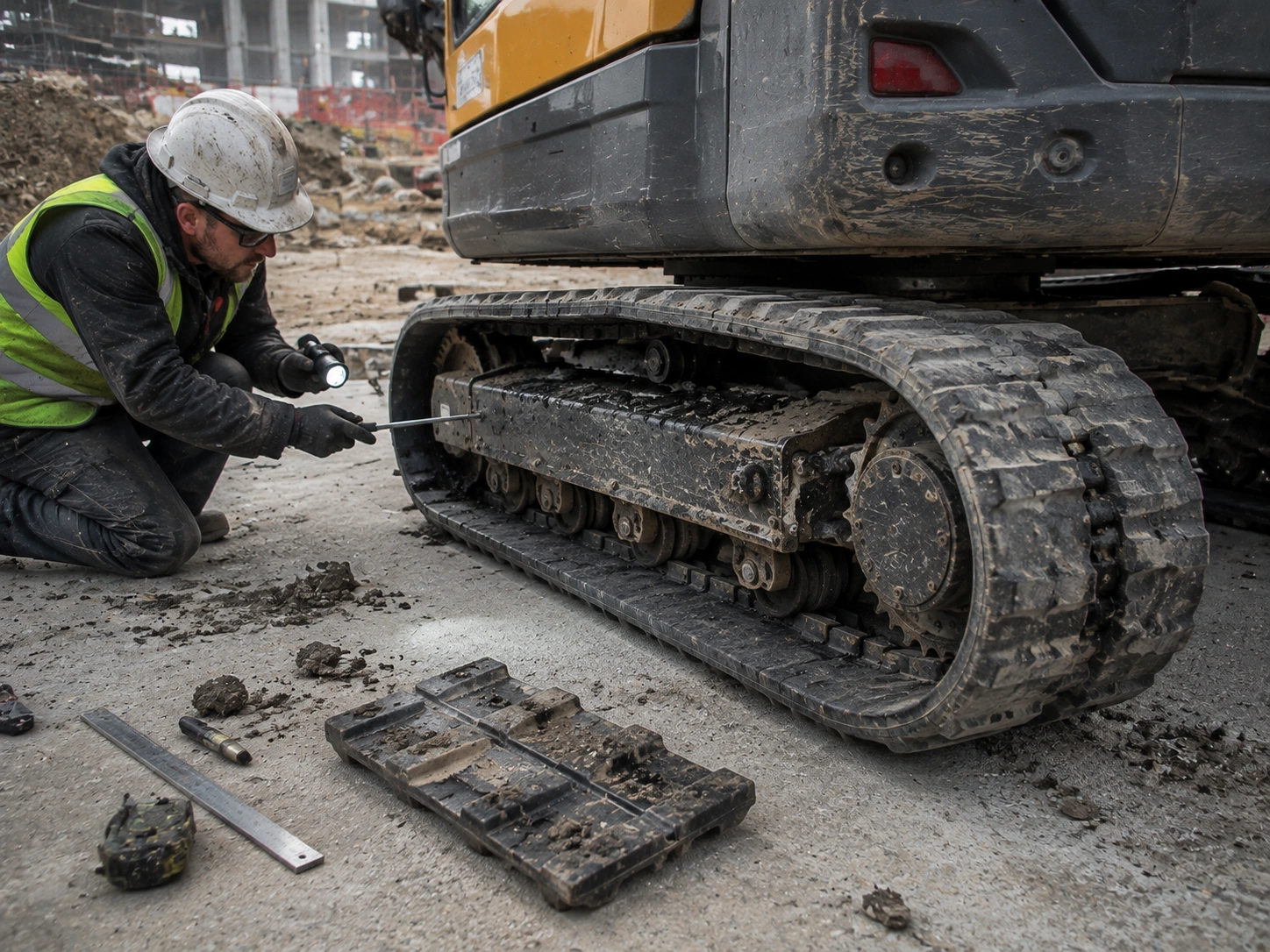
The ground under your machine decides how fast your rubber tracks wear out. Concrete, mud, and rock each affect rubber tracks differently, and repeated exposure can shorten their lifespan on demanding job sites. Many operators don’t realise it until repairs or replacements become unavoidable.
For contractors running mini excavators across New York, ground conditions change block by block. A morning pour in Port Morris feels nothing like an afternoon dig in a muddy lot in Sunset Park. Each surface puts different stress on your tracks, and that wear builds up over time.
This article explains how ground types damage rubber tracks, early wear signs, and choosing and maintaining the right tracks for your terrain.
Read on, and you’ll have a clearer picture of what’s cutting your track life short.
What Concrete, Mud, and Rock Do to Rubber Tracks
Each surface attacks rubber tracks differently, and repeated exposure can shorten track life over time. Concrete grinds lugs down from the outside. Mud stresses the track body from within. Rock cuts straight through the rubber compound when conditions get rough.
The type of ground you work on is one of the main factors behind how long your tracks last. The sections below explain how each surface affects track wear:
Why Concrete Grinds Down Rubber Fast
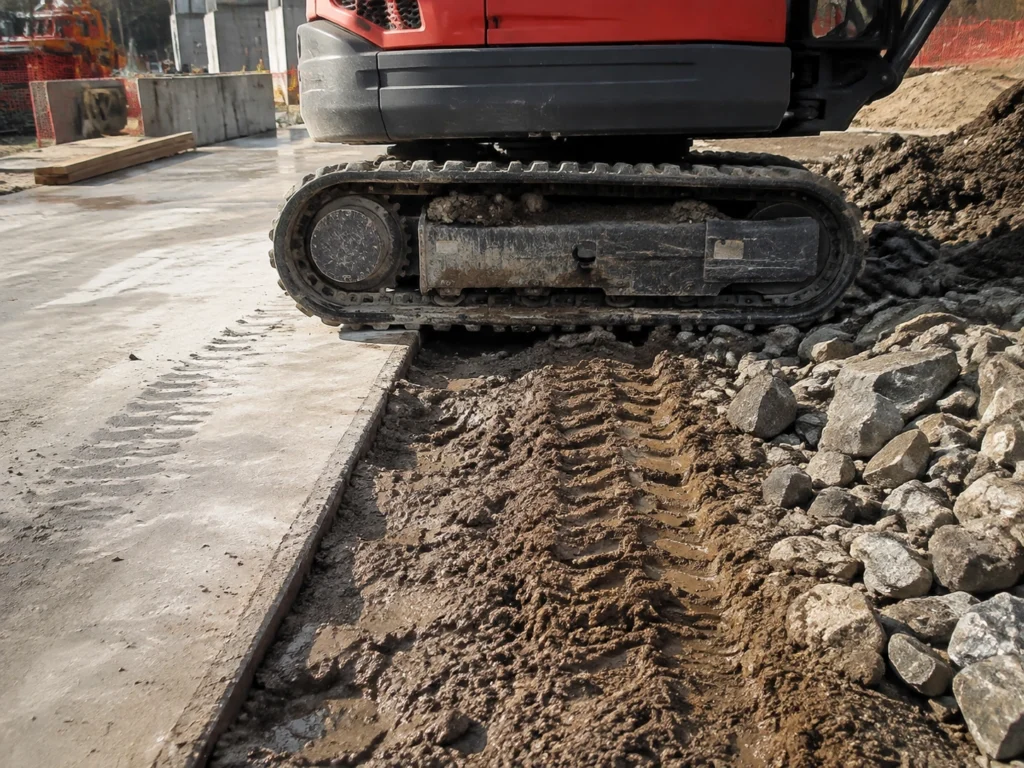
Concrete looks harmless, but it’s one of the roughest surfaces your rubber tracks will ever run on. The hardness creates constant friction against the lug face, and that friction doesn’t let up. Every meter of travel on concrete grinds rubber down at a rate that dirt or grass never comes close to.
Frankly, concrete is the surface most operators underestimate until they’re staring at a worn-out track two months ahead of schedule. Pivoting or doing three-point turns on concrete is especially rough on traction lugs. Rapid lug wear on concrete makes hard-surface pivoting a major cause of early damage.
On top of that, steel track pads are worth considering on longer concrete stretches. They sit over the rubber and take the brunt of the abrasion directly. Operators who use them consistently report a noticeable difference in how long their tracks hold up.
What Mud and Rock Do to Mini Excavator Tracks Over Time
Mud puts a different kind of stress on mini excavator tracks than many operators realise. It packs into the track grooves and quickly builds up around the undercarriage. That extra material increases resistance across the entire track system. It also places added strain on the tracks, rollers, and drive components.
On the flip side, jagged gravel and rock debris are a more immediate problem. Rock edges cut into the rubber, causing chunk loss that’s often missed until it worsens. Mini excavator tracks on mixed terrain face both problems at once.
That said, mud damage develops more gradually, making it easier to overlook. That doesn’t make it harmless. Left unchecked, mud increases strain across the undercarriage. By the time the damage becomes obvious, other components are often already wearing faster.
Reading the Wear: Signs Your Excavator Tracks Are Telling You Something
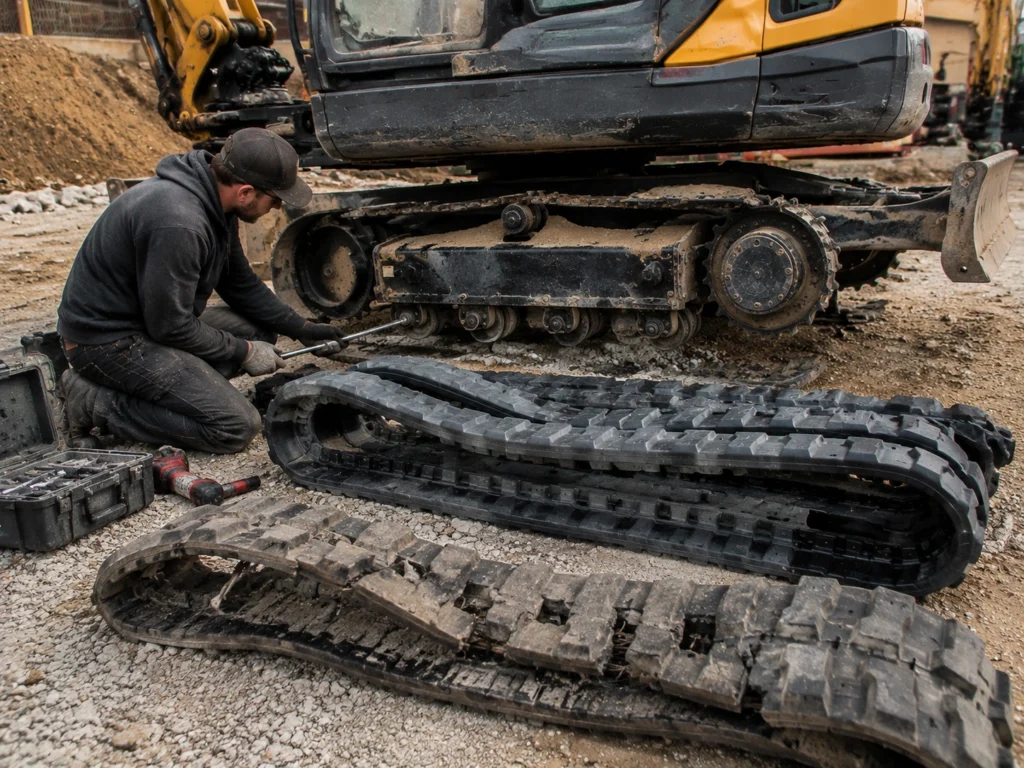
The clearest signs are lug wear, surface cracking, track elongation, and a track that sags or slips off the sprocket. Most of these show up gradually, and that’s exactly what makes them easy to miss. Catching them early is the difference between a fix and a full replacement.
Here’s a breakdown of the six most common wear signs, what they look like, and what each one is telling you:
| Wear Sign | What It Looks Like | What It Means |
| Lug Wear | Lugs are visibly flattened or shorter on one side | Uneven surface contact or excessive pivot work |
| Surface Cracks | Cracks running across the rubber tread face | Track compound is drying out or overloaded |
| Track Elongation | Track feels loose or sags between rollers | Internal cords are stretching beyond safe limits |
| Sprocket Teeth Wear | Teeth look keen, thin, or chipped | Track and sprocket aren’t meshing correctly |
| Chunk Loss | Missing rubber pieces along the track body | Rock or debris impact cutting into the compound |
| One-Sided Wear | Tread depth uneven across the track width | Misalignment or consistent operation on slopes |
These wear signs don’t show up in isolation. One-sided lug wear often comes with sprocket teeth damage, and surface cracks tend to show up alongside track elongation. So when you spot one sign, check the full track before writing it off as a minor issue.
With that in mind, wear patterns tell you more than just the condition of your rubber tracks. They point directly to how your machine is operated and what the ground is doing to it. Spotting these signs early cuts downtime and keeps rollers and idlers from taking on extra strain.
Choosing the Right Rubber Tracks for Excavators Based on Ground Conditions
Most operators don’t realize that picking the wrong track compound for their terrain is just as damaging as skipping maintenance entirely. A track that isn’t suited to the ground it runs on wears out faster and costs more to replace over a full season. On top of that, the machine itself plays a major role in track selection more than most people give it credit for.
Choosing the right rubber tracks for excavators isn’t just about price or brand. It comes down to tread design, compound hardness, and how well the track is engineered for your terrain.
Let’s look at what to consider before you buy.
Lug Pattern and Tread Design: Matching Track Profile to Your Terrain
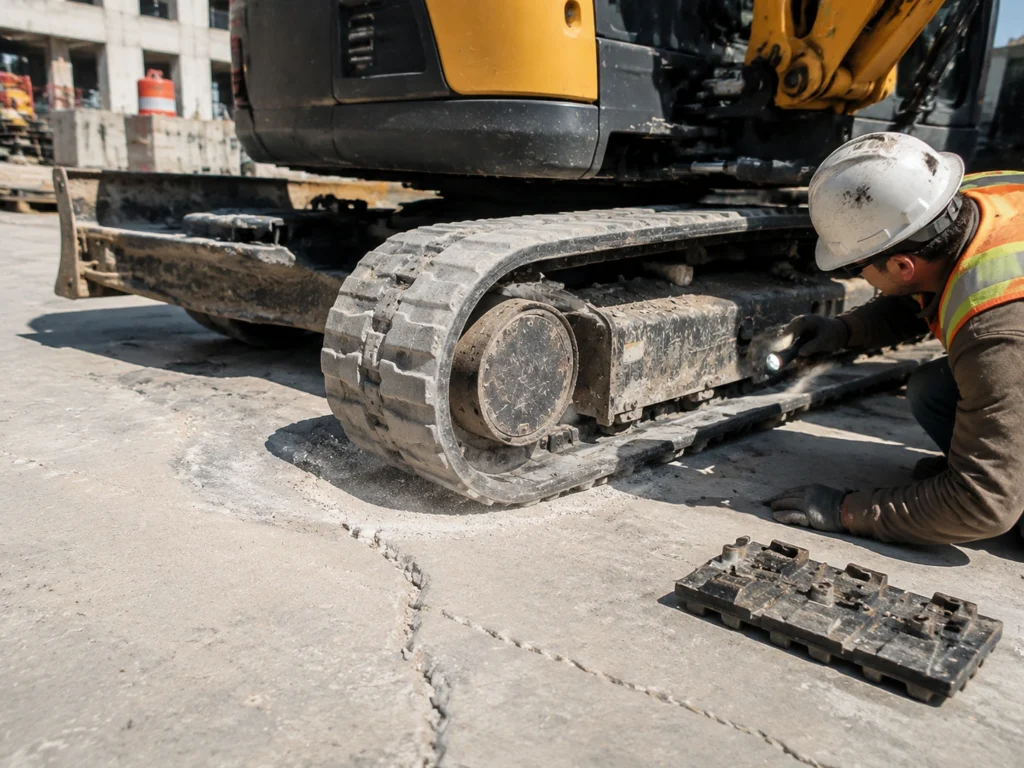
Lug pattern is one of the first things to look at when selecting a track for a specific terrain. Open lug patterns are engineered to shed mud efficiently, so they suit wet, clay-heavy ground far better than a closed tread design. For concrete and compacted surfaces, closer lug spacing gives better traction and more consistent contact across the full track width.
That said, tread depth plays a direct role in durability on rough terrain. Deeper treads handle rock and gravel better and offer improved durability over a longer operating cycle. Shallower treads wear faster on abrasive surfaces but deliver excellent traction on flat, compacted ground.
In that case, multi-terrain tread designs are worth considering for machines that move between surface types regularly. They work across concrete, mud, and gravel without being fully optimized for any one of them. For one main surface, terrain-specific rubber tracks outperform multi-terrain designs.
When Replacement Rubber Tracks Are the Only Sensible Move
There’s a point where maintenance stops being enough, and replacement rubber tracks are the only sensible next step. Cracks deeper than 1 inch, missing lugs, or exposed steel cords are all past the point of repair (that 1-inch rule comes straight from field inspections, not the manual).
For mini excavators and compact track loader machines, pay special attention to how the track runs on the sprocket. Excessive vibration during operation is a sign the track has stretched past its working range. Reduced vibration after a fresh set goes on is one of the clearest signs the premature replacement was already overdue.
In fact, a good example is a Cat mini excavator running a rocky Washington Heights site for three months without a tension check or lug inspection. By the time the operator noticed the vibration, two rollers had already taken damage from the loose track contact.
Your Tracks Work Hard: Make Sure You’re Working Smart
Now that you know how each ground type affects your tracks, the next step is putting that knowledge to work. Concrete, mud, and rock each wear down rubber tracks differently, and no single maintenance habit covers all three. Match your approach to the ground, and your equipment will show it.
Either way, for mini excavators and larger machines alike, inspect often, clean after every shift, and replace before damage spreads. A well-maintained track delivers reduced vibration, a smoother ride, and better operator comfort across a full working day.
Bites Off Broadway stocks a full range of replacement rubber tracks for New York contractors. You’ll find the right rubber tracks for a single mini excavator or an entire fleet at a competitive price. Reach out to our team, and we’ll point you to the right fit for your machine and your ground conditions.